
Secure Enterprise AI Infrastructure: Complete Guide to Agents, Integration & Automation
Discover how to build a robust and secure enterprise AI infrastructure with AI agents, reliable data integration, and scalable automation platforms.

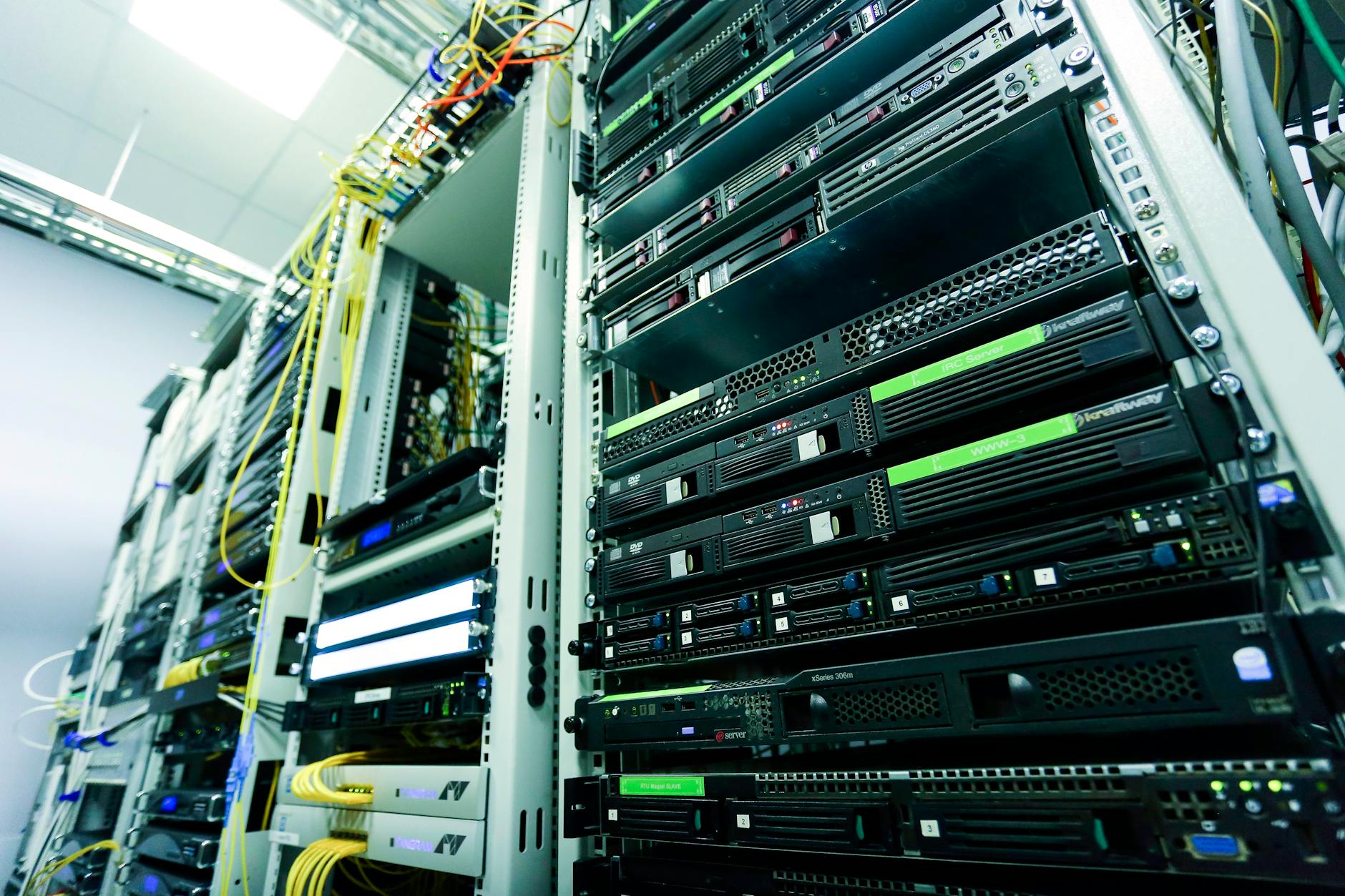
Discover how to build a robust and secure enterprise AI infrastructure using AI agents, reliable data integration, and scalable automation platforms. A technical guide for CIOs and IT managers.
Enterprise AI infrastructures are rapidly evolving toward distributed architectures, integrating autonomous agents, complex data pipelines, and large-scale automation systems. This guide explores the technical foundations, security challenges, and best practices for deploying such an infrastructure.
- Direct Answer
- Basic Concepts & Prerequisites
- AI Agent Architecture
- Data Integration & Governance
- Scalable Automation Platforms
- Security & Resilience
- Common Mistakes
- Best Practices
- Key Takeaways
- FAQ
- Conclusion
Direct Answer
A secure enterprise AI infrastructure rests on three pillars: modular and observable AI agents, robust and governed data integration, and scalable automation platforms. It requires a zero-trust architecture, full logging, and clear governance of models and data flows.
Basic Concepts & Prerequisites
Key Definitions
- AI Agent: autonomous software component capable of acting, learning, and adapting within a given environment, often driven by an LLM.
- Automation Platform: technical environment orchestrating workflows, tasks, and business processes through agents and rules.
- Integrated LLM: language model embedded within an enterprise architecture, often fine-tuned or adapted via RAG.
- AI Architecture: set of components, flows, and policies defining the production, deployment, and operation of AI.
Technical Prerequisites
To build a reliable AI infrastructure, the organization must master several domains:
- Container management and orchestration (Kubernetes).
- Data engineering and pipelines (ETL/ELT).
- Zero-trust security concept.
- Application observability and monitoring.
- Model governance and decision traceability.
Current Context
In 2025, 82% of companies surveyed by McKinsey report having integrated at least one use case of generative AI into their operations. CIOs face a dual challenge: providing powerful tools while managing risks associated with agent autonomy and data exposure. This evolution requires a deep redesign of traditional architectures.
AI Agent Architecture: Modularity, Observability & Control
Principle of Autonomous Agents
An AI agent is not a chatbot. It is a component that perceives its environment, makes decisions, and acts. It is typically structured around four modules:
- Perception: data ingestion (text, images, metrics).
- Reasoning: processing via LLM, logic, or computation.
- Action: API calls, task execution, interaction with systems.
- Learning: feedback loop, fine-tuning, continuous adaptation.
Deployment Models
Agents can be deployed in three modes:
| Mode | Description | Benefits | Limitations |
|---|---|---|---|
| Centralized | All agents run on a single infrastructure. | Tight control, enhanced security. | Limited scalability, potential bottleneck. |
| Distributed | Agents run locally or at the edge. | Low latency, increased resilience. | Higher complexity, data fragmentation. |
| Hybrid | Combination of centralized and distributed modes. | Balance between performance and control. | Higher implementation cost. |
Agent Observability
Any AI infrastructure requires full visibility into agent behavior:
- Logging: every decision, action, and interaction is recorded for audit purposes.
- Tracing: tracking inter-service calls and reasoning chains.
- Metrics: success rate, average task duration, error frequency.
Concrete example: At a European fintech following DATALIA’s model, each decision made by a risk analysis agent is associated with a unique identifier, timestamp, LLM-generated justification, and confidence score. These metadata are indexed in a dedicated data warehouse, enabling full audit in case of dispute.
Data Integration & Governance for AI
Data Supply Chains
AI models rely on reliable data. A modern infrastructure must include:
- Automated Pipelines: ingestion, cleaning, enrichment, and loading (ETL/ELT).
- Data Quality: validations, anomaly detection, proactive correction.
- Data Timeline: versioning and reproducibility of datasets used.
RAG & Dynamic Context
Retrieval-Augmented Generation (RAG) grounds LLM responses in reliable sources:
- The agent receives a user query.
- A vector search engine queries an internal document database.
- Relevant documents are injected as context into the prompt.
- The LLM generates a response based on these sources.
This approach reduces hallucinations and improves reliability, but requires rigorous source management.
Governance & Compliance
The data feeding agents must adhere to several principles:
- Minimization: collect only what is necessary.
- Consent: ensure a valid legal basis (GDPR).
- Data Localization: prefer sovereign hosting (e.g., HDS in France).
- Pseudonymization: protect identities before analysis.
Source: Article 25 of the GDPR (privacy-by-design) and Article 30 (records of processing activities).
Scalable Automation Platforms: Orchestration & Performance
Workflow Orchestration
Automation platforms coordinate agents and heterogeneous systems:
- Workflow Engine: triggering processes based on events or schedules.
- Queue Management: prioritization and routing of tasks.
- Unified Interface: dashboard to supervise all processes.
Horizontal Scalability
To handle variable loads, the infrastructure must support:
- Auto-scaling of agents and containers.
- Load balancing between instances.
- Balancing performance and cost through optimized sizing.
Interoperability
Platforms should integrate easily with existing systems:
- Native Connectors: for ERPs (e.g., Odoo), CRMs, databases.
- Standard APIs: REST, GraphQL, gRPC.
- Messaging: Kafka, RabbitMQ for asynchronous communication.
Example: A real estate agency using a solution like DATALIA can orchestrate, through a single platform, the automated pre-qualification of candidates, visit report generation, and CRM synchronization—all while ensuring GDPR compliance on each operation.
Security & Resilience: Protecting AI Systems
Zero-Trust & Segmentation
The zero-trust approach assumes every component—internal or external—must be authenticated and authorized:
- Strong Authentication: MFA, temporary tokens.
- Least Privilege: access limited to strictly necessary resources.
- Micro-Segmentation: isolation of agents and sensitive data flows.
Model Protection
AI models themselves can be targets:
- Adversarial Robustness: adversarial training, anomaly detection.
- Behavioral Monitoring: alerts on unexpected or biased outputs.
- Versioning & Rollback: ability to revert to a previous model if issues arise.
Operational Resilience
The infrastructure must remain available despite failures:
- Redundancy: multiple active instances.
- Fallback Mechanisms: switching to static rules if AI fails.
- Disaster Recovery: regular backups of models and configurations.
Recommendation: The French National Agency for Information System Security (ANSSI) publishes the General Security Framework (RGS), offering best practices applicable to AI, particularly regarding encryption, authentication, and logging.
Common Mistakes to Avoid
- Deploying an agent without monitoring: impossible to diagnose deviations or drifts.
- Using ungoverned data: bias and leaks become inevitable.
- Neglecting model security: models can be stolen, corrupted, or reversed.
- Ignoring compliance: GDPR, AI Act impose binding obligations, especially in healthcare or finance.
- Overestimating autonomy: agents must remain supervised and auditable.
Best Practices for a Sustainable AI Infrastructure
- Adopt an iterative approach: start with a targeted use case, measure impact, then expand gradually.
- Standardize interfaces: APIs, data formats, logging schemas.
- Integrate security by design: encryption, authentication, logging from day one.
- Maintain regulatory watch: follow GDPR and AI Act developments (official text available on EUR-Lex).
- Plan for ongoing training: technical and business teams must understand AI challenges.
Key Takeaways
| Area | Recommendation |
|---|---|
| AI Agents | Deploy with monitoring, tracing, and logging. |
| Data | Govern sources, pseudonymize, comply with GDPR. |
| Automation | Orchestrate via workflows with redundancy and fallback. |
| Security | Apply zero-trust, protect models, and log all actions. |
| Compliance | Follow AI Act and GDPR, audit regularly. |
Frequently Asked Questions
What is the difference between an AI agent and a chatbot?
An AI agent acts autonomously within an environment, perceiving, reasoning, and acting. A chatbot answers questions without directly interacting with systems.
How to secure a language model integrated into the enterprise?
By limiting access, encrypting inputs/outputs, monitoring abnormal outputs, and ensuring no sensitive data enters without explicit consent.
What is the main risk of poor data governance?
Models reproduce biases present in the data, potentially leading to discrimination or leaks of sensitive information.
Conclusion
Building a secure enterprise AI infrastructure requires a holistic vision, integrating agents, data, automation, and security. It's not just about performance—it's about reliability, resilience, and compliance. Organizations that succeed adopt this architecture progressively, placing governance and observability at the heart of their strategy.
To go further in designing such an infrastructure, DATALIA supports companies in defining sovereign AI architectures, integrating automation platforms, and implementing robust security policies.
Automate your business with AI through DATALIA: DATALIA →