
Secure Enterprise AI Infrastructure: Agents, Integration, and Automation
An enterprise AI infrastructure relies on intelligent agents, secure data integration, and scalable automation. Here is how to design it without exposing your systems.

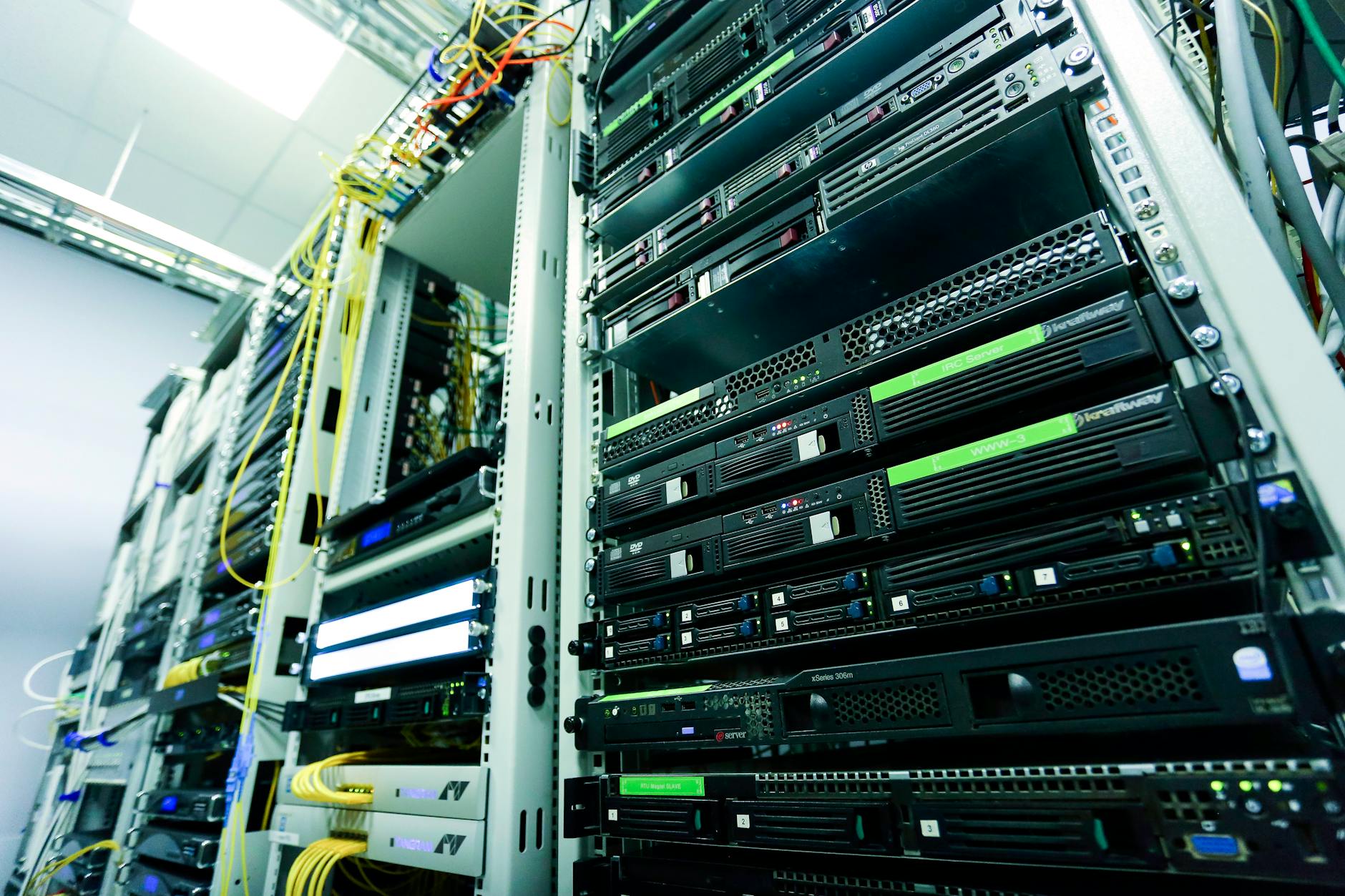
An enterprise AI infrastructure relies on intelligent agents, secure data integration, and scalable automation. Here is how to design it without exposing your systems.
An enterprise AI infrastructure relies on intelligent agents, secure data integration, and scalable automation. Here is how to design it without exposing your systems.
Table of Contents
- What is an Enterprise AI Infrastructure?
- Why AI Agents are at the Heart of the Architecture?
- How to Integrate AI into the Existing IT System?
- What Security for AI Systems?
- How to Automate at Enterprise Scale?
- What Mistakes to Avoid in an AI Project?
- What Best Practices to Adopt?
- FAQ
What is an Enterprise AI Infrastructure?
An enterprise AI infrastructure is a set of technical components designed to deploy, run, and monitor artificial intelligence models within an organization's information systems. Unlike consumer AI, it is integrated into the IT system, subject to internal security policies, and designed to process proprietary data.
It typically includes dedicated servers or cloud services, secure data pipelines, controlled access interfaces, and audit mechanisms. The goal is to allow business teams to use AI without relying on uncontrolled external services.
In a context where 72% of companies already have employees using consumer AI tools without IT approval (source: Logicield, 2023), enterprise AI infrastructure becomes a governance issue as much as a technical one.
Why AI Agents are at the Heart of the Architecture?
An AI agent is an autonomous software capable of interpreting instructions, accessing tools or data sources, and acting on a digital environment. In an enterprise infrastructure, agents serve as intermediaries between language models and operational systems.
AI Agents vs. Simple Prompts
Language models like LLMs are excellent at generating text, but they cannot directly interact with an Oracle database, an ERP, or a CRM. AI agents are orchestrated to perform these actions. For example, an agent can query an ERP to extract a report, rephrase it using an LLM, then send it via email through a secure gateway.
In a recent deployment at DATALIA for a restaurant sector client, a voice agent was connected to a reservation software and a customer database. The agent interprets customers' spoken requests, updates reservations in real time, and alerts staff in case of anomaly. No customer data left the local infrastructure.
How to Integrate AI into the Existing IT System?
Integrating AI into an existing IT system does not mean replacing everything. It involves creating controlled connection points between AI models and heterogeneous systems. Here are the key steps:
1. Catalog of Data Flows
Before connecting anything, map the critical data flows. Identify sensitive sources: customer databases, financial files, access logs. Each flow identified defines an entry point for AI, but also a risk surface.
2. Creation of Secure APIs
AI models do not access databases directly. They go through internal APIs, subject to strong authentication, auditable, and versioned. Each API call is recorded in a centralized log, in accordance with GDPR requirements.
3. Management of Accesses and Roles
AI does not manage rights like a human. It acts via federated identities (SSO) and strictly defined roles. An agent responsible for billing cannot access HR data. This separation is ensured by access policies defined upstream.
In a European fintech where DATALIA deployed a multi-channel analysis solution, each agent operates with a time-limited token valid for 15 minutes. Beyond that, access is automatically revoked and a ticket is generated for the security team.
What Security for AI Systems?
The security of an AI infrastructure relies on three pillars: data localization, traceability of processing, and control of models used.
Localization and Hosting
An AI model hosted abroad is subject to another country's law. In the EU, GDPR requires that personal data be processed in accordance with the regulation. However, if an LLM is hosted in the United States, each prompt becomes a potentially illegal cross-border transfer without adequate safeguards.
Traceability and Auditability
Any decision made by an AI agent must be traceable. This means that every action — whether an API call, a document modification, or an email send — is associated with a timestamped and signed trace. This traceability is not only required by GDPR but also by the AI Act, which classifies high-risk AI systems as controllable.
Control of Models
Using a general-purpose LLM means accepting its biases, implicit updates, and behavioral changes. In an enterprise infrastructure, models are versioned, tested in isolated environments, and deployed according to a rigorous validation process. Some models are even trained locally on non-sensitive aggregated data.
DATALIA offers a sovereign, private, and self-hosted AI solution: DATALIA.App. This platform allows organizations to deploy AI agents connected to their existing systems without ever transmitting data to a third party. It is designed to comply with GDPR and the AI Act, and provides a complete audit log of all interactions.
How to Automate at Enterprise Scale?
AI-based automation should not be limited to a few use cases. It must be integrated into the recurring processes of the organization: billing, customer support, inventory management, compliance, etc.
Service-Oriented Architecture
An automation infrastructure relies on micro-services. Each service manages a specific aspect: data extraction, document classification, task orchestration. These services communicate via an internal message bus, which allows independent scaling.
In a custom ERP deployed by DATALIA for a CPTS, three micro-services automate administrative management: one extracts data from timesheets, one classifies medical certificates, and one orchestrates hierarchical validations. Result: 70% reduction in manual processing, without changing team habits.
Intelligent Orchestration
Orchestration ensures that each task is executed in the right order, at the right time. An orchestration engine analyzes dependencies between tasks, prioritizes them, and retries in case of failure. Unlike linear automations, this approach adapts to variations in the IT system.
For example, if an invoice arrives without supporting document, the orchestrator automatically creates a ticket for the relevant department, while keeping track of the pending item in the tracking system.
What Mistakes to Avoid in an AI Project?
Error 1: Ignoring Regulatory Updates
GDPR and the AI Act impose specific requirements on transparency, traceability, and data minimization. An AI project launched without a legal framework can be interrupted, or worse, penalized.
Error 2: Connecting AI Directly to Critical Systems
Giving an AI agent direct access to a production database or a payment system is extremely risky. Without intermediate validation, a prompt error can lead to destructive changes.
Error 3: Neglecting Team Training
AI agents are only effective if properly used. Targeted training on best prompting practices, response interpretation, and anomaly reporting is essential.
What Best Practices to Adopt?
- Start Small: Deploy an AI agent on a simple process (e.g., email classification), measure the impact, then gradually expand.
- Separate Environments: Pre-production, testing, and production environments must be strictly isolated. AI testing should never be done on real sensitive data.
- Audit Regularly: Implement a quarterly AI audit program: access, traces, performance. Document any discrepancies.
- Version Prompts: Each prompt sent to an AI agent must be versioned and commented. This facilitates debugging and compliance.
- Back Up Models: Keep versions of models used. In case of regression, it should be possible to quickly revert to a previous version.
FAQ
What is the Real Cost of an Enterprise AI Infrastructure?
The cost depends on the complexity of integrations, the number of agents deployed, and the level of security required. A simple deployment (document classification) can be achieved for tens of thousands of euros, while a complete architecture with orchestration and high availability can reach several hundred thousand euros.
Is it mandatory to host AI internally?
For sensitive data or critical processes, yes. However, for less sensitive use cases (e.g., internal writing), an external provider may be suitable under conditions of strictly controlled data transfer.
Book your call and free audit today with a DATALIA expert: DATALIA →
