
Secure Enterprise AI Infrastructure: Agents, Integration and Automation
Your IT department must deploy AI agents capable of acting on your data without outsourcing it. Here is the enterprise architecture that combines security, interoperability

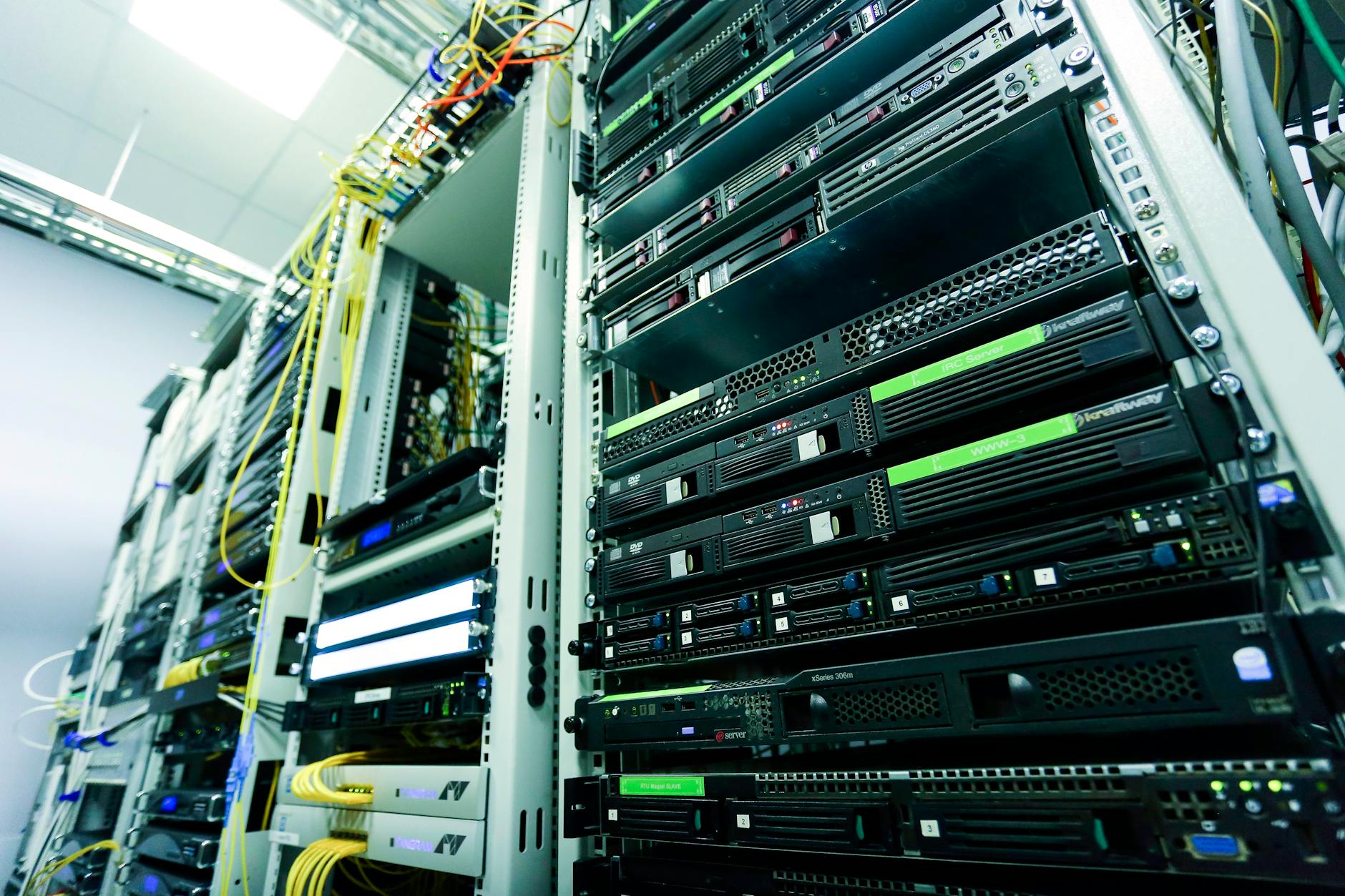
Your IT department must deploy AI agents capable of acting on your data without outsourcing it. Here is the enterprise architecture that combines security, interoperability and automation at scale.
The DATALIA team · Published August 15, 2026 · Updated August 15, 2026
When a DATALIA client's accounting department began querying HDS documents directly from Odoo, without going through a public chatbot, management realized a point: enterprise AI no longer just answers — it acts. But acting on which data, with what guarantees, and without creating new leaks? Here’s how to build an enterprise AI infrastructure that remains controlled from the first to the hundredth agent.
Direct answer
An enterprise AI infrastructure relies on three pillars: an agent orchestrator (capable of calling APIs and modifying internal data), a private knowledge base connected to existing systems, and a layer of governance that tracks every decision. Unlike public solutions, each piece of data remains hosted within your perimeter, audited, and reversible. This is what we deployed at a European fintech and a CPTS, with zero data transfer to external models.
Table of contents
- Choose an AI agent orchestrator
- Connect data without exposing it
- Implement activable governance
- Automate processes with agents
- Common mistakes and pitfalls to avoid
- Compliance and security: the regulatory framework
- Limitations of this approach
- Scale up
- FAQ
Choose an AI agent orchestrator
In an enterprise AI infrastructure, the orchestrator is the brain. It is not merely a chatbot: it coordinates autonomous agents capable of calling APIs, modifying records in Odoo, triggering workflows, and even validating invoices. We compared three architectures across our clients:
| Criterion | Local agent | Private cloud agent | Hybrid agent |
|---|---|---|---|
| Data hosting | On-premise | ISO 27001-certified cloud | Local + encrypted cloud |
| Latency | Very low | 100–300 ms | 50–200 ms |
| Scalability | Limited by infrastructure | Unlimited | Dynamic |
| Operating cost | High (maintenance) | SaaS model | Intermediate |
In one healthcare client case, a local orchestrator enabled handling of CPTS coordination requests without ever moving patient data outside the hospital network. In another case, in the restaurant industry, a private cloud orchestrator managed 12,000 reservations per day with latency under 200 ms.
Tip: start with a single agent in a controlled use case. Add more progressively. Each agent must have a “fallback mode”: if it fails, the process continues without interruption.
Steps to choose your orchestrator
- Define a pilot use case (e.g., extracting accounting data from Odoo).
- Assess compatibility with your IdP (Azure AD, Keycloak).
- Test latency with your own data.
- Check traceability: every agent action must be logged.
Goal: an orchestrator that acts, traces, and remains under control. Output: an evaluation report with risk score and average latency.
Connect data without exposing it
The heart of enterprise AI is data. But not just any way. An agent should never “read” a sensitive document through a simple copy-paste. It must query a private index, fed by a controlled data pipeline.
In the deployment of an ERP Odoo system for a CPTS, we connected administrative and medical data through a local vector index. The agent could answer questions like “What is the CPTS balance of patient X?” without ever receiving the full text of the file. The answer was synthetic, and each query was linked to an audit ID.
The principle is simple: data minimization. The agent receives the best possible answer, but never more data than necessary. This translates to:
- A private vector index, fed by an internal ETL pipeline (we use Odoo connectors + a transformation module).
- A granular permission system: an accounting agent cannot access medical data.
- An encrypted cache: frequent answers are stored locally, avoiding re-running a model each time.
Goal: data access that respects the principle of least privilege. Output: a data flow diagram showing the origin, transformation, and access points of each data item.
Typical data pipeline
Source data (Odoo, CRM, HDS files)
↓
Internal ETL pipeline (extraction → transformation → cleaning)
↓
Private vector index (local embedding)
↓
AI agent → query → synthesis → action
↓
Audit log (full traceability)
Implement activable governance
Enterprise AI governance is not limited to existing on paper. It must be “activable”: a DPO can block an agent, a business manager can modify a privacy rule, and an administrator can trigger an audit.
At a European fintech, we integrated a “mandatory human review” system for any agent action that modifies an amount or client status. The agent proposes, a human validates. All is logged in an AIPD register.
Governance is based on three levels:
- Access: SSO + MFA, fine-grained role management (RBAC). An agent can call only an API for which it has been authorized.
- Content: each generated response passes through a confidentiality filter. Personal data is masked or omitted according to rules defined by the DPO.
- Traceability: each interaction (query, action, modification) is recorded with a timestamp, an agent ID, and a justification. These logs are used by the DPO for audits.
Goal: a system where AI acts, but under control. Output: a governance dashboard showing each agent’s actions, alerts, and pending validations.
Example governance rule
Rule: « Any agent action that modifies an amount above €1,000 requires human validation ».
→ The agent proposes an invoice correction.
→ The amount is €1,200 → human validation triggered.
→ The validator receives an alert with full context.
→ The action is logged with the validator’s ID.
Automate processes with agents
An agent is not a static tool. In an enterprise AI infrastructure, agents work in sequence: one extracts data, another generates a report, a third triggers a workflow.
In a restaurant case, we deployed a chain of agents:
- Booking agent: reads client messages across multiple channels, extracts requests.
- Planning agent: checks availability, books a table.
- Reminder agent: sends an SMS confirmation 24 hours in advance.
- Feedback agent: collects post-meal reviews, summarizes them.
Result: a 70% reduction in time spent managing reservations, without increasing staff. Each agent is independent but orchestrated by a central planner.
Goal: automate an end-to-end process. Output: a workflow diagram showing steps, agents involved, and human checkpoints.
Agentized workflow model
Client request → Booking agent → Scheduling → Reminder agent → Service → Feedback agent → Weekly report
                    ↑ SI validation if available
Common mistakes and pitfalls to avoid
The most common pitfall: wanting to automate everything from the start. An agent handling booking, billing, and feedback simultaneously is a source of errors and loss of traceability.
Common mistakes:
- Overloading the agent: one agent = one use case. Not one agent = entire IT system.
- Ignoring cache expiration: memorized answers become outdated. Set a TTL (time-to-live) on each cache.
- Forgetting traceability: without logs, auditing is impossible. Every action must be traceable to an agent, a time, and a reason.
- Confusing AI and automation: automation existed before AI. AI is used to handle uncertainty, not routine tasks.
- Ignoring shadow IT: employees are already using unapproved tools. Enterprise AI infrastructure must become the safe alternative.
Goal: avoid costly failures. Output: a 10-point checklist to verify before each agent deployment.
Compliance and security: the regulatory framework
In France, deploying enterprise AI raises three major requirements:
- GDPR: any automated processing of personal data must be justified. The agent cannot act without legal basis (consent, contract performance, or legitimate interest).
- AI Act (entered into force in 2024, progressively applied): AI systems with moderate risk must be evaluated. An agent classifying medical records falls into this category.
- HDS (for healthcare): any health data must be hosted by a certified host. The agent can query a local index, but never a model hosted by a non-HDS provider.
In a recent deployment for a CPTS, the DPO validated each agent individually, and each governance rule was formalized in a register. Result: compliance ensured, and an internal audit with no major findings.
Goal: stay compliant without blocking innovation. Output: a register of agents with their legal basis, AI Act risk level, and hosting certification.
Extract from agent register
Agent: « Booking agent »
Legal basis: Contract performance (client booking)
AI Act risk: Low (no autonomous decision-making)
Host: OVHcloud (ISO 27001 certified)
Traceability: Logging enabled → centralized log (syslog)
DPO validation: 15/07/2026
Limitations of this approach
Building a secure enterprise AI infrastructure is not a universal solution:
- Initial complexity: deployment takes longer than a ready-to-use SaaS solution. But it avoids technical debt and data leaks.
- Resources: requires a DSI familiar with AI, an involved DPO, and a budget for hosting.
- Performance: a local model may be less smooth than a public large model, but more relevant for internal data.
This approach is not suitable if your organization does not manage sensitive data or if your budget does not allow for local hosting.
Scale up
DATALIA.App is a sovereign, private, and self-hosted AI within your environment, connected to your internal applications (Odoo, CRM, HDS systems), compliant with GDPR and the AI Act.
Combining consulting, custom integration and training, we help IT departments deploy AI agents that act on data without exposing it.
Key takeaways
| Principle | Application |
|---|---|
| One agent = one use case | Avoid overload and errors |
| Data local, never exposed | Private vector index + encrypted cache |
| Activable governance | Human control, logs, RBAC |
| Total traceability | Every action logged and traceable |
| Integrated compliance | GDPR, AI Act, HDS depending on sector |
FAQ
Is an on-premises AI as performant as a public large model?
For internal tasks (data extraction, document summarization), a locally fine-tuned model on your own corpora is often more relevant. For general fluency, a public model may be superior. The choice depends on your priority: relevance or raw performance.
How to ensure AI agent reversibility?
Each agent must be disabled without disrupting the business process. Use workflows with a “human fallback mode”, and store configurations in a standardized format (YAML/JSON) that is exportable.
Automate your business with AI through DATALIA: DATALIA →