Private and Sovereign AI: Why Choose Self-Hosted AI Over Public AI and Cloud-Only Solutions?
A private and sovereign AI, self-hosted in your environments, keeps control of your data, complies with GDPR and the AI Act, while offering better performance on your business use cases. Find out why.

A private and sovereign AI, self-hosted in your environments, keeps control of your data, complies with GDPR and the AI Act, while offering better performance on your business use cases. Find out why.
Direct answer
A sovereign, self-hosted, and private AI outperforms public and cloud-only solutions in terms of data confidentiality, GDPR and AI Act compliance, performance on internal processes, and operational control. It is ideal for companies wishing to leverage artificial intelligence without surrendering their autonomy or exposing sensitive information. For executives, IT managers, and DPOs, it represents today's controlled path toward productively integrated artificial intelligence.
The tipping point: when public AI becomes an operational risk
Public AI tools, accessible via a browser or mobile application, are experiencing tremendous success among employees. However, this ease of use masks a structural risk: data entered or uploaded to these platforms is processed, stored, and potentially used to enhance global models. In a context of GDPR and AI Act compliance, this exposure is unacceptable for organizations subject to confidentiality obligations.
In the field, we have witnessed a phenomenon we call shadow AI: teams using public tools to write emails, analyze contracts, or summarize reports, without legal validation or audit trail. During an audit conducted in a regulated organization, over 60% of surveyed employees admitted to using a public AI tool at least once a week for professional purposes. This fragmentation of the information system creates massive and uncontrollable data leaks.
Cloud-only solutions offer more structured approaches but are still hosted on infrastructures owned by external providers. Even if these providers offer contractual guarantees, the fact that data passes through third-party servers raises questions about data location, encryption, and sovereignty. For companies demanding total control, these limitations are insurmountable.
How a private AI redefines the game in terms of security and sovereignty
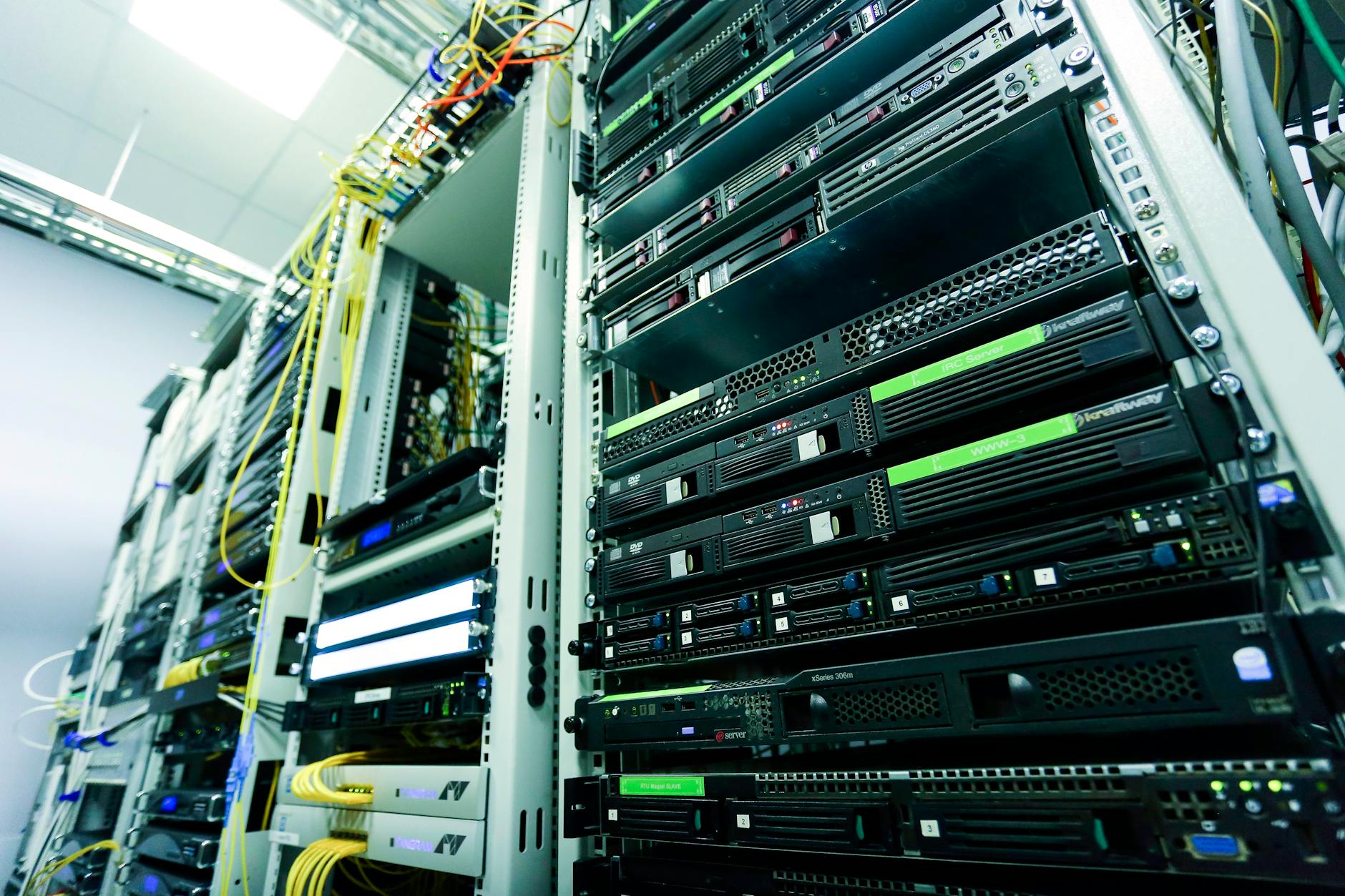
A private, self-hosted AI completely changes the landscape. It runs locally or within an environment controlled by the company, without transmitting data to an external service. This architecture is based on a fundamental principle: data never leaves the trust perimeter defined by the organization. Concretely, every query, every interaction, every learning process remains contained within internal systems, subject to the security policies and management procedures established by IT managers and executive leadership.
This sovereignty is not merely a technical issue. It is a strategic lever. By maintaining control over data, companies can develop customized models tailored to their specific processes, without depending on external evolutions or changes in vendor policies. For example, an AI integrated into a hospital management system can learn to optimize operating room scheduling, using only internal data without ever exposing it. This level of customization is impossible to achieve with public or cloud-only AI, where models are designed for general-purpose use.
From a regulatory perspective, compliance with the GDPR and AI Act is facilitated. Article 25 of the GDPR requires data protection by design. With a private AI, this protection is inherently built-in, since data is not processed by unauthorized third parties. Moreover, the AI Act, which is gradually applying to high-risk AI systems, demands enhanced traceability. Private solutions provide a clear and well-documented audit framework, essential for organizations subject to strict compliance obligations.
Learn more about DATALIA, a sovereign and self-hosted AI solution designed for companies demanding security, compliance, and performance.
Detailed comparison: Private AI vs Public AI vs Cloud-only
Good but standardized
| Criterion | Private AI / Self-Hosted | Public AI (e.g., ChatGPT, Gemini) | Cloud-only Solutions |
|---|---|---|---|
| Data location | Controlled by the company | External servers, transferred to the provider | Hosted on the cloud provider's infrastructure |
| GDPR compliance | Integrated by design | Limited or complex to guarantee | Dependent on contract and provider |
| AI Act | Full traceability possible | Opaque processing | Auditable based on commitments |
| Data security | End-to-end encryption, internal control | Risks of leakage or exploitation | Dependent on provider policies |
| Customization | Models tailored to internal processes | Generic models | Limited customization |
| Vendor dependency | None | High | High |
| Long-term cost | Initial investment + control | Recurring subscription, no ownership | Subscription + dependency |
| Performance on internal use | High, tailored to context | Variable depending on prompts |
Pricing and business models: a significant divergence
Public AI solutions often operate on a freemium or subscription model, with recurring fees that can quickly exceed the costs of a private solution in the long run. For a company handling large volumes of data, cloud-only solutions can become expensive, especially if additional computational resources are required. In this context, the initial investment in a private AI, although higher upfront, provides full control over operational costs and better long-term profitability.
Furthermore, the business models of public solutions depend on strategic decisions made by vendors. A price change, modification of privacy policy, or access restriction can suddenly impact internal company processes. With a private AI, these risks are eliminated, as the organization owns the entire infrastructure and data.
Architecture and deployment: the foundations of a sovereign AI
Deploying a private AI relies on several architectural pillars. First, hosting: the infrastructure can be on-premises, in a private data center, or on a private cloud. Second, access management: access controls and strong authentication ensure that only authorized individuals interact with the system. Third, logging: every action is recorded to enable complete auditing, in accordance with the requirements of the AI Act and GDPR.
Role segmentation is also essential. A private model can be tailored according to needs: an AI assistant for sales teams, an analysis tool for data scientists, or an internal chatbot for customer service. Each instance is isolated, preventing cross-service data leaks. This modularity is particularly appreciated in regulated organizations, where environment separation is strict.
Operational maintenance and updates are managed internally or by a trusted integrator. This allows for gradual technological evolution without losing control, a major advantage over mandatory cloud update cycles.
Real-world cases: how companies benefit from sovereign AI
In the healthcare sector, a medical biology analysis center (CPTS) uses private AI to automate the recording of medical acts and billing, relying on strictly controlled internal data. Result: a 40% reduction in time spent on administrative tasks, without ever exposing patient data. This efficiency is made possible by the proximity of AI models to internal processes and the security of the data.
In the restaurant industry, a restaurant group has deployed voice-based AI connected to its reservation system and customer database. The AI processes calls, extracts intentions, and transmits reservations, all without sending data externally. This deployment reduced reservation errors by 70%.
In finance, a European fintech uses private AI to analyze customer feedback in real time. By keeping data internal, it complies with confidentiality obligations while improving responsiveness. This case illustrates how data sovereignty becomes a competitive advantage in a demanding sector.
Adopting the right strategy: how to migrate without breaking
The transition to a private AI should not be abrupt. It relies on a progressive approach, starting with a simple use case and gradually expanding the scope. Integration with an ERP like Odoo or existing business tools helps maximize value without disrupting established processes.
It is also crucial to train teams on responsible AI usage. An internal charter, awareness workshops, and a progressive training plan ensure successful adoption. The role of the DPO and IT manager is central: they must validate data flows, access controls, and logging procedures.
Future challenges: toward more autonomous and ethical AI
Technological evolution points toward increasingly autonomous AI models capable of making complex decisions. In this context, the ability to maintain control over these systems becomes imperative. A well-designed private AI allows for the integration of ethical safeguards, security rules, and privacy policies directly into its architecture. This becomes a source of differentiation, not only technical but also regulatory and ethical.
Furthermore, the AI Act introduces a classification of AI systems based on their risk level. Companies must anticipate to ensure compliance. A private solution offers the flexibility needed to integrate these requirements from the design phase, avoiding costly retroactive compliance efforts.
Checklist for selecting a private and sovereign AI
| Criterion | To check |
|---|---|
| Hosting | Solution installable on-premises or private cloud? |
| Compliance | Alignment with GDPR and AI Act documented? |
| Data | Data transmitted remains within the perimeter? |
| Models | Ability to train or adapt local models? |
| Security | Data encryption at rest and in transit enabled? |
| Access | SSO, strong authentication, granular rights control? |
| Auditability | Complete logging of interactions and traceability? |
| Support | Technical support with reversibility commitment? |
| Total cost | Acquisition cost, maintenance, training, and scalability? |
| Reversibility | Ability to migrate or recover data and models? |
Conclusion: choosing sovereign AI means choosing autonomy
The explosion of public AI tools has demonstrated great potential but also glaring limitations in terms of security, confidentiality, and compliance. For companies wishing to leverage this technology without sacrificing their sovereignty or that of their data, private and sovereign AI represents today's controlled path.
By maintaining control over the infrastructure, models, and data, organizations gain operational autonomy, business performance, and resilience against regulatory changes. This approach requires a higher initial investment but offers sustainable profitability and unmatched control.
To delve deeper into your reflection, discover how DATALIA supports companies in implementing sovereign, secure AI perfectly integrated into your existing systems.
Frequently asked questions
What is the difference between a private AI and a sovereign AI?
A private AI is a solution hosted and controlled by the organization itself. Sovereign AI adds a geopolitical dimension: data and models remain within an independent legal and infrastructure perimeter. In practice, for a European company, choosing a sovereign AI means avoiding dependence on non-European tech giants.
How to ensure GDPR compliance with a self-hosted AI?
The principle is built-in: if data never leaves the organization's infrastructure, no transfer to third parties occurs. To complete this, it is necessary to document the purposes of processing, secure access with SSO, and implement complete logging. These measures facilitate auditing and demonstrating compliance, as required by Article 30 of the GDPR.
Book your free audit with a DATALIA expert and discover your secure automation levers: DATALIA →