Private and Sovereign AI: Why Choose a Self-Hosted AI Over a Public AI
A private and self-hosted AI keeps your data under your control. It is compliant with GDPR and the AI Act, with no third-party transmission. Here's why it's strategic.

A private and self-hosted AI keeps your data under your control. It is compliant with GDPR and the AI Act, without any third-party transmission. Here's why it's strategic.
Direct answer: For a business leader or CIO concerned with compliance, the answer is clear: private and sovereign AI outperforms public AI whenever confidentiality, data control, and traceability are requirements. Public AI is suitable for occasional and non-sensitive uses. Private AI is designed for business processes, customer data, and regulated environments. The verdict depends on the profile: for a CTO or DPO, sovereignty prevails. For an isolated user, convenience wins.
The Evolving Enterprise AI Market
The global enterprise generative AI market would reach 15 billion dollars by 2027, with an annual growth rate of more than 20%. However, a growing tension emerges between performance and control. Organizations quickly adopt public tools like ChatGPT or Google Gemini, but IT and compliance teams react with caution. In 2024, 68% of companies surveyed by Gartner report having instituted a formal prohibition or strict restriction on the use of public AI for sensitive tasks.
This evolution is explained by several factors. First, the strengthening of European regulation, particularly the AI Act, which imposes strict obligations on high-risk AI systems. Then, data leaks and information leaks via public models become tangible operational risks. Finally, business leaders note that the performance of a well-deployed private AI competes with, and even exceeds, that of public solutions for specific business use cases.
Comparison Criteria Used
To evaluate solutions, we retain five critical axes. Firstly, data sovereignty: where do the information flow and who has access to them? Secondly, regulatory compliance: does the AI respect GDPR, the AI Act, and sector-specific standards? Thirdly, operational security: encryption, authentication, access logging. Fourthly, integration with the existing information system: ERP, CRM, internal databases. Finally, total cost of ownership: infrastructure, maintenance, training, and scalability.
These criteria are evaluated on a scale from one to five, based on real requirements expressed by CTOs and DPOs in deployment projects. The assigned weights reflect the relative importance of each axis according to business profiles. For an SME, ease of use and initial price matter more. For a CIO or DPO in a regulated structure,
compliance and traceability are priorities.
Private Self-Hosted AI: Presentation and Strengths
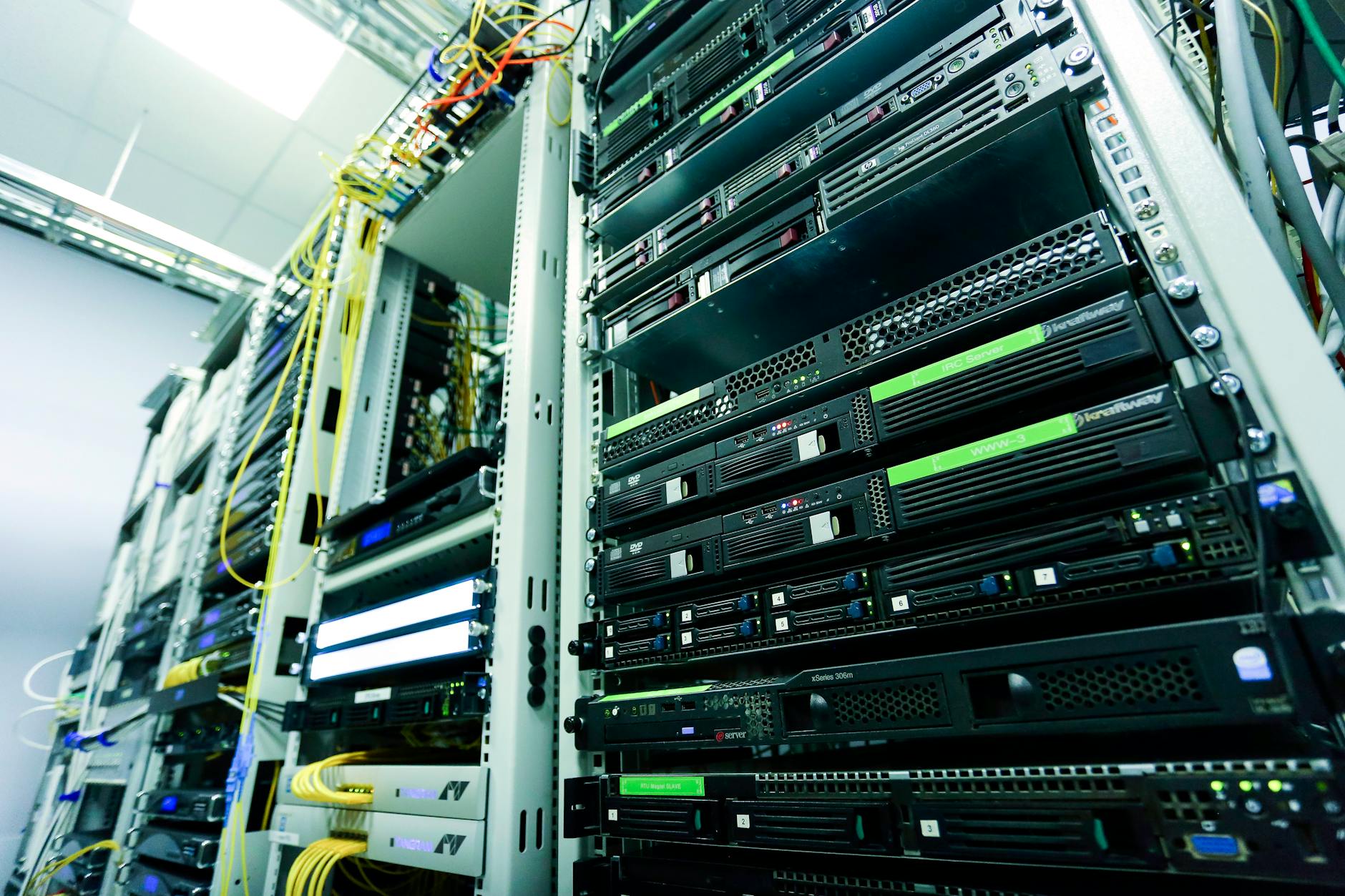
A private self-hosted AI is deployed within the organization's infrastructure or with a trusted service provider. Data never leaves the controlled environment. The model can be open source or proprietary, but the key point is the total control of the entire pipeline: ingestion, processing, response. At DATALIA, for example, deployment relies on an infrastructure certified ISO 27001 and hosted in France, with a direct connection to internal databases via secure APIs.
The main strength of this approach is sovereignty. The client knows exactly where its data is hosted, who has access to it, and how it is encrypted. Secondly, compliance becomes local and auditable. The DPO can produce audit logs in real time. Thirdly, integration is deep: the AI can reason over internal documents, contracts, or customer histories without exposing them. Finally, scalability is controlled: each capacity addition is a managed decision, not a vendor dependency.
Enhanced Compliance and Security
Private AI offers security guarantees far superior to a public solution. Data encryption at rest and in transit is managed by the organization. Access is authenticated via an integrated SSO. Every interaction is logged, attributable, and reversible. For a DPO, this means that every query to the AI can be traced, which is impossible with a public model. Moreover, data transfer can be avoided: the AI works directly on internal servers, never letting them leave the perimeter.
Public AI and Cloud-Only: Convenience vs Control
Public solutions such as ChatGPT Enterprise or Google Workspace AI offer immediate ease of use. No infrastructure to manage, no model to train. The user types a question and receives a response within seconds. For non-sensitive uses — draft writing, brainstorming, content synthesis of open-source material — they are extremely effective. Their marginal cost is low, and model updates are automatic.
However, this convenience hides risks. Data submitted to a public AI becomes training data or is used to improve the service. Even in "enterprise" mode, the terms of service leave ample room for interpretation regarding data ownership and confidentiality. For a DPO, each use of a public AI on internal documents creates a risk of GDPR violation. Traceability is absent: it is impossible to know what is stored, how, and for how long.
Operational and Legal Risks
The risks related to public AI are real and documented. In 2023, several large companies suffered leaks of confidential information after employees pasted contracts or source code into public models. Data protection authorities, particularly CNIL in France, have already launched investigations into cases of non-compliant AI usage. The legal risk is equally high: if data leaks via a public AI, the company is fully responsible, even if the model belongs to a foreign vendor.
>
On the operational level, dependency is total. If the service provider changes its terms of use, removes a feature, or increases prices, the organization has no recourse. Cloud-only AI is a sold service, not a controlled resource. For a company sensitive to data, this vulnerability is intolerable.
Comparison Criterion by Criterion
Data sovereignty is the first criterion. Private AI clearly outperforms: data remains within the client's infrastructure, with no external transmission. A public AI, even in enterprise mode, relies on multiple servers, often located outside the European Union. The second criterion, compliance, is also resolved in favor of private AI. GDPR requires control over data; the AI Act imposes obligations on high-risk systems. A private AI can be designed to respect these requirements from its conception. A public AI must adapt its offerings, and guarantees remain unclear.
Regarding operational security, private AI is also superior. It allows applying internal security policies, auditing each access, and controlling updates. A public AI depends on the service provider's security practices, over which the client has no control. On integration, private AI can be directly connected to internal systems, while public AI offers limited connectors. Finally, on total cost, private AI requires a higher initial investment but offers cost control in the long term.
For Which Profiles and Use Cases?
For a CIO or CTO in a regulated structure — healthcare, finance, justice — self-hosted private AI is the only viable option for sensitive uses. It enables reasoning over internal data without exposing it. For a DPO, it offers the traceability and control required by GDPR. For a SME business leader, a private AI can be deployed to automate internal processes, such as billing or inventory management, with enhanced security.
Public AI remains relevant for non-sensitive uses. A writer can use a public AI to generate content ideas. A developer can use it to fix non-critical bugs. However, as soon as the data involves third parties, customers, or internal processes, private AI becomes essential. The rule is simple: the more sensitive the data, the more critical sovereignty is.
Total Cost of Ownership: Myths and Realities
The cost of a private AI is often perceived as excessive. Local infrastructure, licenses, qualified personnel… However, the total cost of ownership of a public AI can quickly exceed that of a private solution. On one hand, recurring costs of subscriptions per user accumulate. On the other hand, the loss of productivity linked to the fear of exposing data often incites to restrict the use of public AI, thus reducing its return on investment.
Finally, for a regulated structure, the cost of a data breach or a GDPR fine can reach millions of euros. In this context, investment in a private AI is quickly justified. In 2024, CNIL imposed a total of over 120 million euros in fines, including several related to failures in data protection in the use of external tools. Prevention costs less than repair.
Verdict and Recommendations
For a CTO, a CIO, or a DPO, the answer is clear: private and sovereign AI is the appropriate solution for sensitive uses and regulated environments. It offers sovereignty, compliance, and security. For an isolated user or a writer, public AI remains useful for non-sensitive tasks. The combination is possible: a private AI for critical processes, a public AI for assisted creativity.
The transition to private AI does not happen without a thorough analysis. It is necessary to map data flows, identify sensitive uses, and choose a certified host. At DATALIA, this approach is supported by a free audit and a gradual deployment, to ensure adoption and performance. The choice between private and public AI will always depend on the context, but the trend is undeniable: sovereign AI is gaining importance, especially in regulated sectors.
Frequently Asked Questions
Is a private AI more expensive than a public AI?
In the short term, the initial investment is higher. In the long term, the total cost of ownership becomes competitive, especially for high-intensity uses. The triggering factor is often compliance: a GDPR fine costs more than a private infrastructure.
What data should be avoided with a public AI?
Any sensitive, confidential data, or having a link with third parties. This includes customer contracts, internal files, health or financial data. Even anonymized, these data present a risk of re-identification. The rule is to never submit data that one would not share publicly.
Automate your business with AI thanks to DATALIA: DATALIA →
