Private and Self-Hosted AI: Why Choose Control Over Power
A French SME had its customer data exfiltrated after an employee pasted an accounting document into a public chatbot. Nothing was encrypted, hosted outside the EU, and no one could trace its usage. The incident cost 40,000€ in fines and a month of crisis. Here’s why private and self-hosted AI change

A French SME had its customer data exfiltrated after an employee pasted an accounting document into a public chatbot. Nothing was encrypted, hosted outside the EU, and no one could trace its usage. The incident cost 40,000€ in fines and a month of crisis. Here’s why private and self-hosted AI changes the game.
The DATALIA team · Updated in August 2025
The Divide Between Public AI and Controlled AI
In the corridors of major European corporations, the debate is no longer: « Should we use AI? » It’s: « Are we going to be treated as just another data point in a machine we don’t control? » The answer lies in a strategic choice: private and self-hosted AI, which gives you control over the data, the model, and the entire processing pipeline.
Synthetic Comparison
| Criterion | Public AI (e.g. ChatGPT, Gemini) | Hybrid Cloud | Private and Self-Hosted AI |
|---|---|---|---|
| Data Hosting | US or unguaranteed EU | Possible third-country locations | Local or certified EU infrastructures |
| GDPR Compliance | Limited, unclear liability | Dependent on provider | Full control over processing |
| Data Reversibility | None | Partial | Complete |
| Leak Risk | High | Medium | Very low |
| Total Cost Over 3 Years | Low initially, hidden costs | Medium to high | High initially, controlled |
What Is Private and Self-Hosted AI?
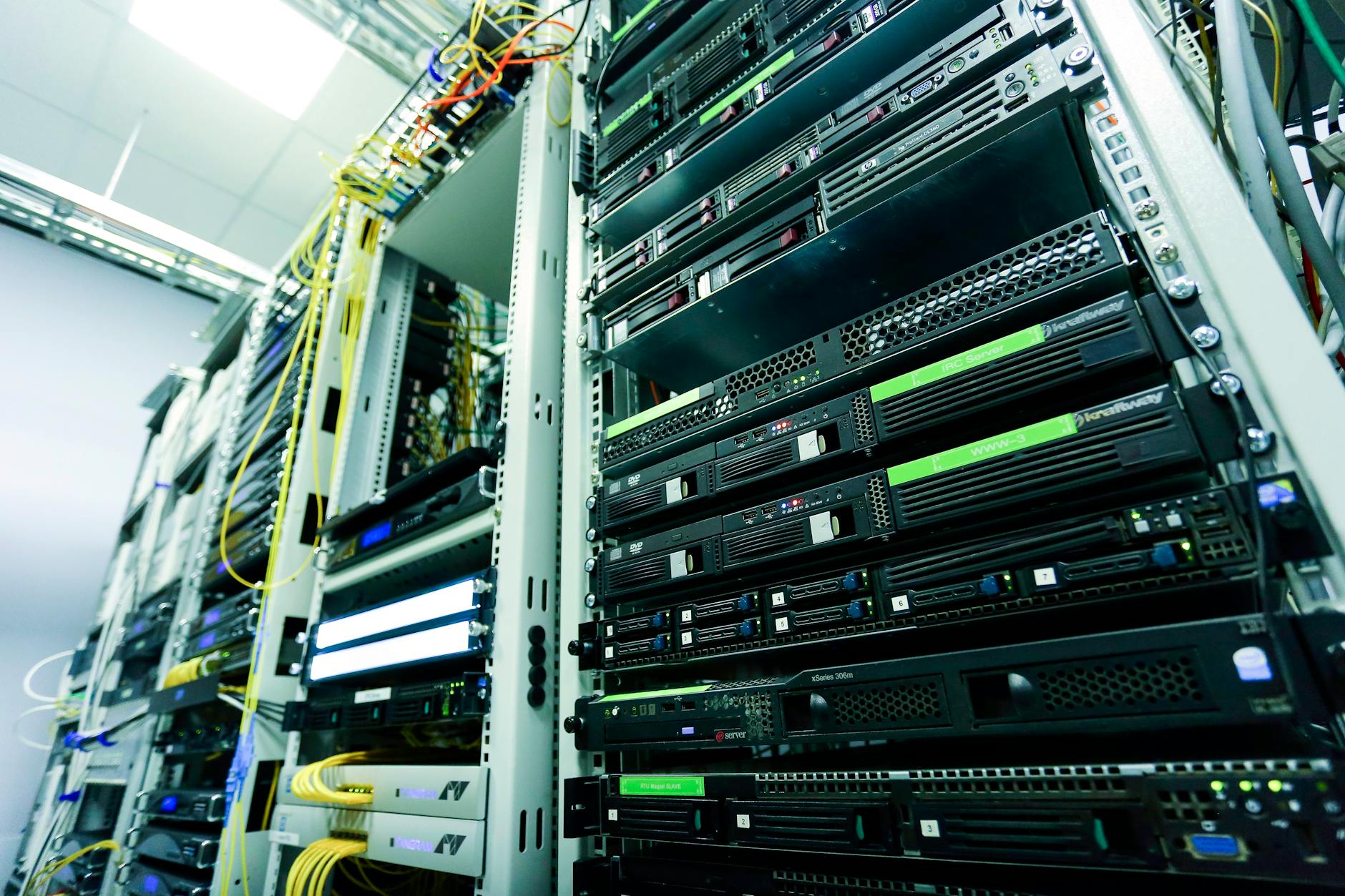
A private AI is an artificial intelligence model deployed within an infrastructure controlled by the organization itself. It never transmits data to third parties. Self-hosting means that the model, training data, and usage logs are physically located on servers managed by the company or a trusted service provider.
Unlike public AI platforms such as those offered by OpenAI or Google, a private AI ensures data security, GDPR compliance, and full traceability of every interaction.
Case Study: A Law Firm Protects Its Sensitive Files
A law firm based in Lyon, specializing in business law, used a public tool for contract research. Files containing confidential clauses were regularly pasted into chat interfaces. In 2024, the firm migrated to a private and self-hosted AI solution, hosted in France by an ISO 27001 and HDS-certified provider.
Since then:
- Nothing is shared beyond the legal perimeter.
- Usage logs are retained for every request.
- Internal audits are conducted without relying on an external provider.
The DPO approved the deployment in under two weeks. No compliance alerts since.
Why Public AI Is a Risk for Businesses
Public AI tools operate on a business model based on massive data collection. When your employees enter sensitive information — an invoice, an audit report, a project schedule — that data may be:
- Used to train the generalist model.
- Stored on infrastructures located outside the EU.
- Exfiltrated via APIs or configuration leaks.
Even if some providers claim to offer « private modes », these remain opaque. The data control never fully belongs to the company. And in the event of a dispute, the chain of responsibility becomes unclear.
Hybrid Cloud: An Insufficient Compromise?
So-called « hybrid » solutions promise to combine the power of public models with some degree of control. In reality, they often rely on remote models with an abstraction layer. The problem persists: data flows through servers managed by a provider, and legal guarantees remain limited.
Moreover, the sovereign cloud requires significant infrastructure investments and does not guarantee the absence of data withdrawal by a third party. Digital sovereignty is not merely about using a local host: it requires full control over the entire processing chain.
How Private AI Meets GDPR and AI Act Requirements
The GDPR mandates data minimization, traceability of processing, and the right to data portability. A self-hosted AI enables adherence to these principles:
- Controlled Data: No data leaves the company perimeter.
- Traceability: Every interaction is recorded and archived.
- Auditability: Usage logs are accessible without relying on a provider.
Regarding the AI Act, it classifies AI systems based on their risk level. An internally used AI for administrative or analytical tasks falls under the « limited-risk » category. However, if it's used for automated decision-making that impacts individuals' rights, it falls under the « high-risk » category, requiring strict safeguards.
A private AI offers the flexibility to adapt control mechanisms to each risk level.
Hidden Costs of Public AI
Many organizations underestimate the costs associated with using public AI tools. Beyond the advertised price, here’s what can escalate:
| Cost Item | Public AI | Private AI (Over 3 Years) |
|---|---|---|
| Monthly Subscription | 20€/user/month | 0€ (excluding internal licenses) |
| Legal Risks | Up to €20M fine (AI Act) | Minimized |
| Internal Risk Management | Continuous audit required | Simplified internal controls |
| Maintenance and Training | Externalized | Internal or shared |
In regulated companies, the cost of non-compliance can reach several million euros. Private AI reduces these exposures to a minimum.
How to Choose a Reliable Private AI Platform?
Here is a checklist to evaluate a solution:
- Local or EU Hosting: Data must remain in a safe third country.
- Security Certifications: ISO 27001, SOC 2, HDS where applicable.
- Access Control: SSO, RBAC, detailed logging.
- Model Transparency: Open architecture or interpretable model.
- Data Reversibility: Full export available at any time.
- Support and Maintenance: Available locally or through a trusted partner.
Private AI Is Not a Constraint, It’s a Competitive Advantage
By protecting its data, a company gains autonomy. It eliminates dependence on tech giants and builds a foundation of trust with its clients. In a context where data confidentiality is a major commercial argument, private AI becomes a strategic lever.
Internally, teams gain freedom in usage. They can query models tailored to their field without fear of leaks or restrictions. This is what we call sovereign AI: AI in service of the organization, not the other way around.
Conclusion: Scaling with Private AI
Public AI has its place in innovation. But in controlled, regulated, or sensitive environments, private and self-hosted AI has become a strategic necessity. It enables the reconciliation of performance, security, and compliance.
At DATALIA, we support organizations in deploying sovereign and private AI solutions, integrated into your business processes, hosted according to your requirements, and designed to last.
Frequently Asked Questions
What is the difference between private AI and public AI?
Public AI is accessible to everyone, hosted by a third-party provider, and can use your data to improve the model. A private AI is deployed within your own infrastructure, never shares your data, and gives you full control over usage and processing.
Can an SME afford a private AI?
Yes. Several modular solutions allow you to start with a limited scope. The initial investment is higher than a public subscription, but the total cost over 3 to 5 years becomes competitive, especially when avoiding legal risks.
Automate your business with AI through DATALIA: DATALIA →