Private AI vs Public AI: Why Self-Hosted AI Wins
Your team just pasted a summary report containing customer data into a public chatbot. No one knows if the document was retained. That morning, the DPO realized the answer didn't just depend on AI quality, but on who truly controlled it.

Your team just pasted a summary report containing customer data into a public chatbot. No one knows whether the document was retained. That morning, the DPO realized the answer didn't just depend on the AI's quality, but on who truly controlled it.
Published by The DATALIA Team · Updated September 2025 · Reading time: 9 min
What Is a Private, Self-Hosted AI Used For?
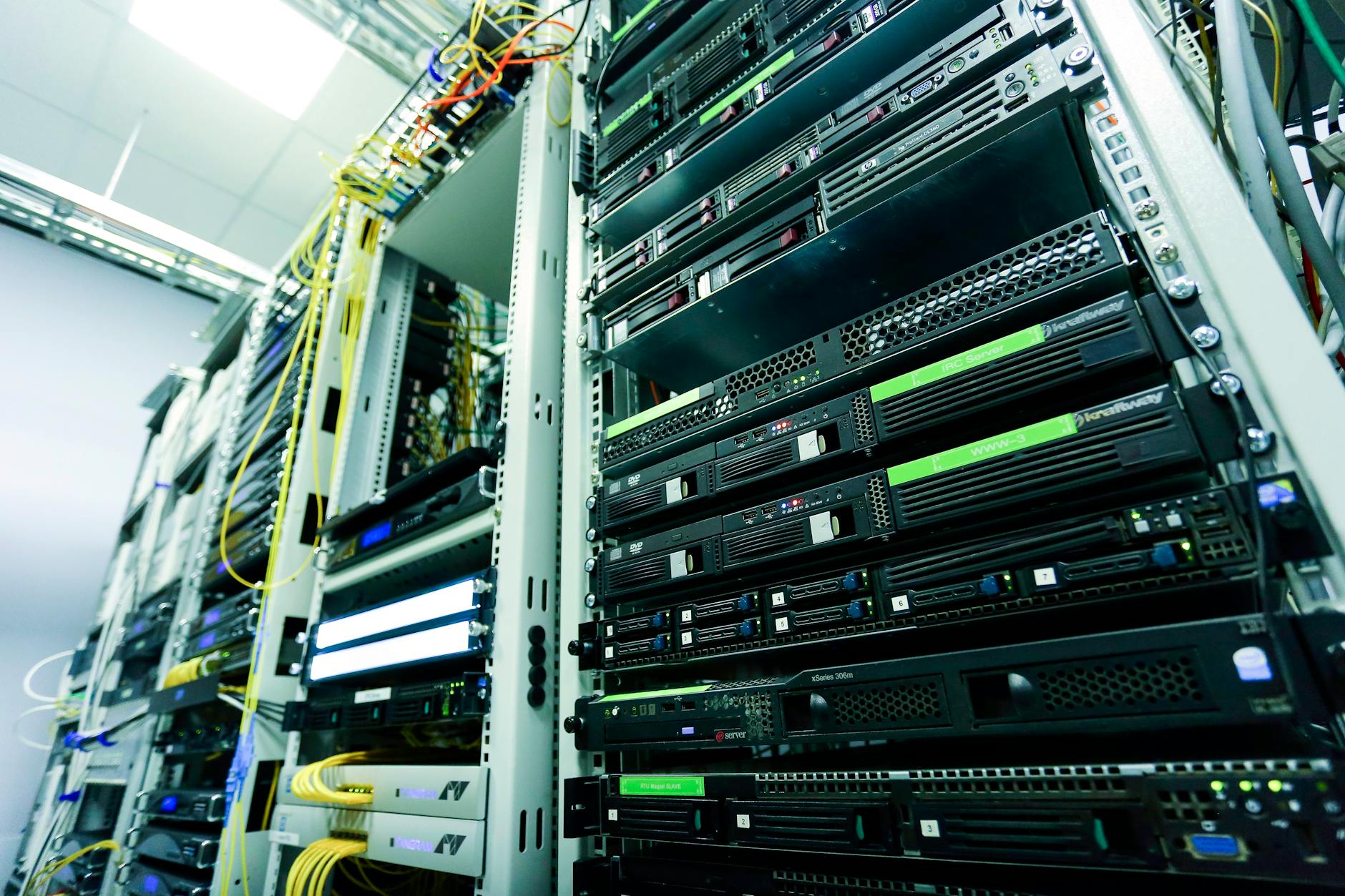
A private, self-hosted AI is an artificial intelligence model deployed within your company's infrastructure or with a trusted host, where data never leaves your perimeter. Unlike ChatGPT or public cloud assistants, no exchange is used to train a shared model, and every query remains under your control. This is the preferred option when handling sensitive data, when subject to the AI Act or GDPR, or when you cannot accept any risk of data leakage.
The Risks of Public AI, Told Like a Specification Document
The client: a European fintech that authorized the use of a public assistant for writing summary notes. Six months later, the DPO discovers that several documents containing customer metrics had been indexed by the provider. Result: legal basis questions, potential hearings, and irreparable loss of customer trust. This scenario is common because it matches exactly what the CNIL calls the "hidden use of AI."
The problem isn't the quality of the response. It's legal and organizational. A public AI relies on three assumptions: your data has no strategic value, your exchanges will never be used to train a competitor, and you have full visibility into their journey. In practice, none of these assumptions hold. GDPR requires a legal basis for each processing operation. But when an employee pastes a document into a chatbot, there is no explicit consent, no subcontracting agreement, and no updated processing register.
What the Shadow AI Statistics Hide
Internal surveys show that 72% of employees already use a public model at least once a week, often without declaring it. For a CISO or DPO, this means the real data processing surface isn't limited to ERP or CRM systems: it also extends to informal channels. And each channel is a potential vulnerability.
The AI Act enters this landscape with unprecedented precision: high-risk AI systems are those that influence access to an essential resource, or evaluate credit or appeal requests. But for an SME or a regulated structure, risk doesn't always come from the high-risk scope itself. It comes from a lack of control. A public AI, no matter how powerful, is a black box for which no one can guarantee adherence to the principle of data minimization.
How Private AI Changes the Game: Two Real Cases
The first example comes from the healthcare sector. A CPTS, DATALIA client, deployed a self-hosted voice assistant for coordination between its medical and administrative teams. Result: zero documents left the internal network, responses were logged, and each interaction was tied to a business objective: reduce coordination phone calls by 40% over three months. Performance wasn't the only requirement met: compliance was too.
The second case is a Franco-Belgian real estate agency that replaced the use of a public chatbot with a private AI integrated into its CRM. Solvency analyses and prequalifications are now generated locally. No more risk of leaking supporting documents, no more questions about the legal basis for processing, and better traceability for the processing activities register. These are two examples showing that the alternative isn't theoretical: it's operational.
Detailed Comparison: Private AI vs Public AI
| Criterion | Public AI (ChatGPT, Claude, Gemini) | Self-Hosted Private AI |
|---|---|---|
| Hosting | Provider's cloud | Your infrastructure or certified host |
| Data Control | None | Total |
| GDPR Compliance | Depends on the provider | Guaranteed by your organization |
| Marginal Cost per User | Subscription or free with time limits | Fixed, independent of number of requests |
| Leak Risk | High | nil if properly designed |
| Customization | Limited | Full control over prompts and workflows |
This table sums it up: public AI is a convenience solution, private AI is a control solution. And that's exactly where the gap lies between companies that see AI as a tool, and those that see it as a risk.
The Cost Question: Why Private AI Isn't Necessarily More Expensive
A CFO often hesitates to switch to private AI because they think the upfront cost is higher. But the real cost of public AI isn't the subscription. It's in incidents, potential leaks, required audits, and lack of control. A private model, once deployed, becomes a depreciable asset. There's no per-user or per-request surcharge. And it can be sized to last.
In the case of an SME with 50 employees, moving to private AI may seem costly at first glance. But if we estimate that each employee loses an average of 30 minutes per day on manual tasks or information searches, the monthly productivity gain often offsets the cost of a private deployment. And this gain is repeatable, unlike a public license that must be renewed.
The Legal Imperatives: What the AI Act Actually Says
Adopted in 2024, the European AI regulation (AI Act) is being rolled out progressively. Articles 5 and 7 state a simple principle: placing on the market or using a banned AI system is punishable, and high-risk systems must meet strict requirements for traceability, transparency, and governance. What many executives don't understand is that the AI Act applies to all systems used on European territory, including those hosted abroad.
A public AI, hosted by a U.S. or Chinese provider, offers no guarantees regarding data traceability or response reproducibility. A private AI, on the other hand, allows maintaining a complete audit log. Every decision and every response can be traced, which becomes essential for a compliance audit.
Legal Basis and Subcontracting: The Hidden Gap
When an employee uses a public chatbot, data processing has no clear legal basis and no signed subcontracting agreement. The data controller (the company) remains legally responsible, even if a foreign provider is involved. The CNIL has repeatedly reminded that using non-compliant services exposes companies to administrative fines of up to 4% of global revenue.
Self-Hosting: More Freedom, Less Dependency
The myth that private AI is only a solution "for large corporations" is a major barrier to its adoption. But self-hosting can be gradual. An SME can start with an internal assistant for writing emails or summarizing internal notes, then gradually expand the scope. The key point is sovereignty: you decide when, how, and why data is used.
Digital sovereignty isn't a technical option: it's a strategic one. In a context where international relations influence access to technologies, the ability to maintain control over AI models becomes a competitive advantage. And for a French or European company, this also reflects a resilience strategy.
When Public AI Can Still Be Useful
It would be excessive to reject all forms of public AI. For non-sensitive tasks, such as drafting internal non-confidential documents or reformulating trivial text, a public assistant can save time. The issue arises when this use becomes systemic and unregulated.
Simple rule: if data could become public tomorrow, or if it relates to a client, patient, collaborator, or sensitive business process, it should never pass through a public model. This rule, though it may seem draconian, is the same one increasingly imposed by public institutions on their agents.
Private AI in Regulated Sectors
In healthcare, HDS (Health Data Host) certification is mandatory for any health data processing. A public AI, no matter how powerful, cannot guarantee this certification. In finance, the ANAC and ACPR require complete traceability of automated decisions. A self-hosted private AI, integrated with a logging system, meets this requirement. In real estate, processing supporting documents and solvency analyses must adhere to the principle of data minimization: a private model can be configured to not retain documents after processing.
In every sector, the constraint is the same: AI must be designed to comply with the legal framework, not circumvent it. This requires clear governance, control over data flows, and managed hosting.
Which One to Choose Based on Your Profile
For an SME director, the priority is not to block innovation. But protecting the company is equally important. A self-hosted private assistant, integrated with existing tools, allows experimenting with AI without exposing data. For a CISO, the criterion is perimeter control: SSO, rights management, documented APIs, and complete logging. For a DPO or CISO, the answer is obvious: more visibility, less risk.
For a regulated structure, the choice is imposed: you cannot use a public model to process sensitive data. Private AI then becomes a standard, not an option. And this is exactly what recent deployments in healthcare and finance demonstrate.
Frequent Mistakes to Avoid in Deployment
Error 1: Neglecting training. A private AI requires adoption. And adoption comes through targeted training, not broad dissemination.
Error 2: Underestimating integration. A private AI doesn't work in isolation. It must connect to your existing systems. A lack of interoperability quickly becomes a barrier.
Error 3: Omitting governance. Without clear rules on usage, data, and data flows, the risk of shadow AI remains, even with a private model.
Conclusion: A Question of Control, Not Performance
The performance of an AI model is no longer the sole selection criterion. Control is. In a world where every data point is an asset and every processing operation is a responsibility, self-hosted private AI isn't an alternative: it's a necessity for demanding companies.
At DATALIA, we've supported several organizations in this choice, combining consulting, custom integration, and training. Our approach is based on a method called VASPIS, whose step 1 (Vision & Analysis) allows mapping data flows before any deployment.
Discover how DATALIA can secure your AI deployment: DATALIA →
Frequently Asked Questions
Is private AI slower than public AI?
In some cases, yes, due to network latency. But for sensitive processing, the difference is more than offset by security and compliance. And for recurring uses, the private model can be optimized for speed.
What is the real cost of a self-hosted AI?
The initial cost includes infrastructure, integration, and training. But it quickly pays off through productivity gains and the absence of leak risks. For an SME, deployment can be amortized in less than six months.
When should you call on a service provider like DATALIA?
When you need a ready-to-use solution, integrated with your tools and designed to meet your legal obligations. Our role is to ensure compliance, not assume it.
Sources
- Regulation (EU) 2024/1689 of the European Union, AI Act — EUR-Lex
- General Data Protection Regulation (GDPR) — EUR-Lex
- CNIL — Guide "AI and Data Protection" — www.cnil.fr
- DATALIA — https://datalia.app