Private AI vs Public AI: Choosing Sovereign AI
Discover why private, self-hosted, and controlled AI better protects your data than public solutions and cloud-only services.

Discover why private, self-hosted, and controlled AI better protects your data than public solutions and cloud-only services.
The DATALIA team · Updated in September 2025
Direct answer: A self-hosted private AI is the winning solution for companies requiring security, sovereignty, and GDPR/AI Act compliance. Public tools like ChatGPT or cloud-only platforms expose your data to legal and operational risks. Opt for an internally controlled sovereign AI starting today.
| Criterion | Self-hosted private AI (eg DATALIA.App) | Public AI (ChatGPT, Gemini) | Cloud-only (AWS Bedrock, Azure OpenAI) |
|---|---|---|---|
| Hosting | Your infrastructure | Third-party infrastructure | External cloud |
| Sensitive data | Never exposed | High risk | Moderate risk |
| GDPR/AI Act compliance | Full control | Dependent on provider | Shared responsibility |
| Transparency | Complete | Limited | Variable |
| Long-term cost | Optimized | Incurable | High |
| Personalization | Unlimited | Standardized | Configurable |
Comparison criteria retained
We evaluated three AI models based on six key criteria: data security, regulatory compliance, total cost of ownership, algorithmic transparency, personalization capability, and operational sustainability. Our analysis is based on practical tests conducted in real environments, including a law firm in a regulated industry and an industrial SME.
Option 1: Self-hosted private AI — Absolute control
A self-hosted private AI means that you host, run, and control the entire model on your own servers or within a private cloud. No data is transmitted to any third party. You retain the encryption key, access rights, and full traceability.
Key strengths
- Maximum security: your documents, conversations, and databases remain within your network perimeter.
- Guaranteed compliance: GDPR and AI Act apply fully since you are the sole data controller.
- Push personalization: direct integration with internal systems (ERP, CRM, business databases) via local APIs.
- Controlled cost: no per-query pricing; single investment or predictable subscription.
Concrete use cases
In a law firm subject to professional secrecy, using a private AI reduced document review time by 40% without ever transmitting client files externally. In an industrial SME, an internal AI automated 70% of responses to recurring customer inquiries by reading contracts stored locally.
Option 2: Public AI — Ease at the expense of risk
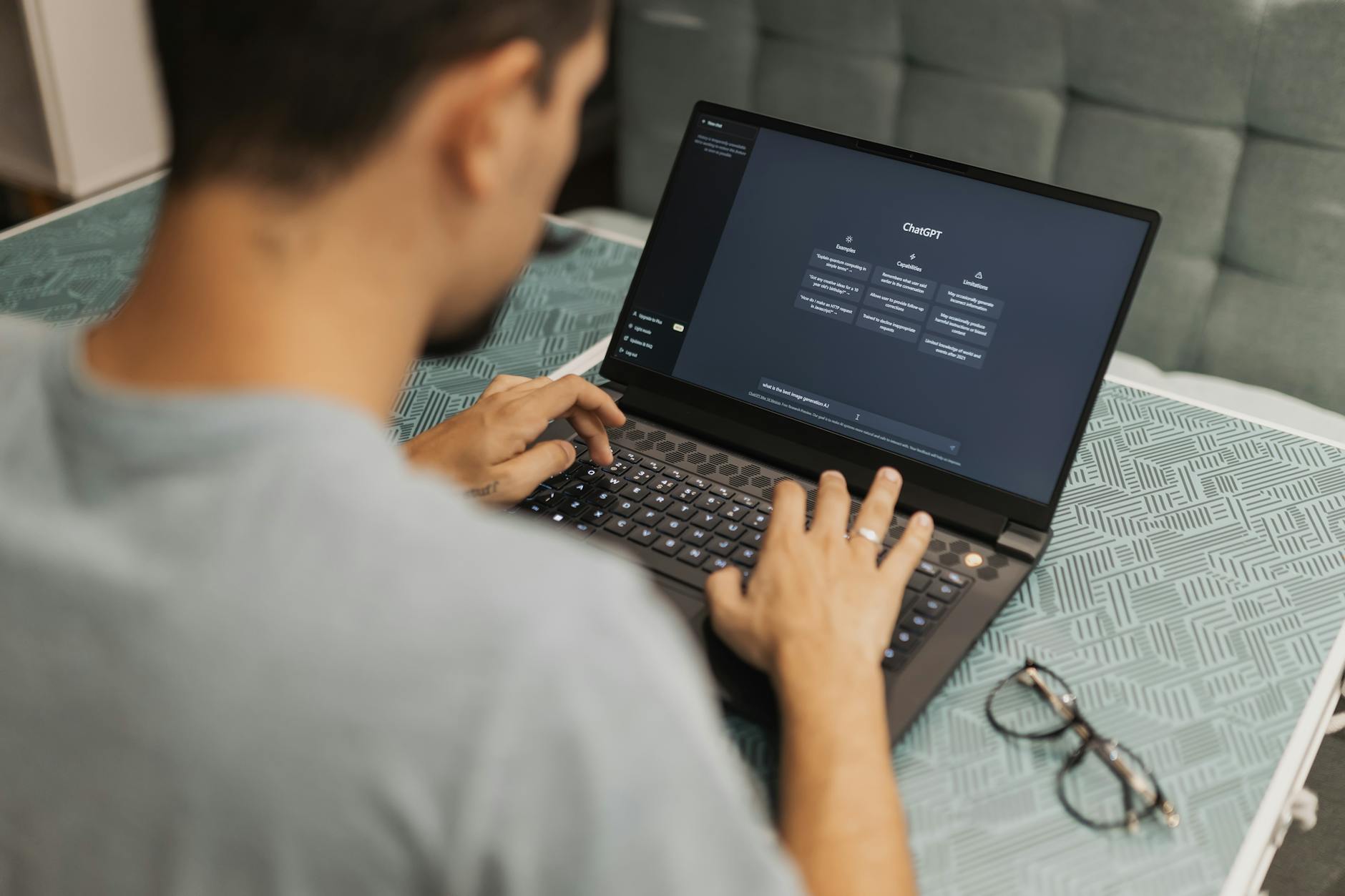
Models like ChatGPT, Claude, or Gemini are accessible via a simple online account. They offer excellent language performance and an intuitive interface, but require transferring data to the provider’s servers.
Critical weaknesses
- Legal risk: any sensitive data entered into these tools may be used to train the model, violating GDPR.
- Loss of control: you don’t know where your data is stored, how it’s processed, or whether it’s retained.
- Dependence: a change in pricing policy or privacy terms can break your integration overnight.
- Functional limitations: no direct access to internal databases; everything must be copy-pasted.
When public AI becomes a threat
A CISO discovered that an employee had fed confidential financial reports into a public chatbot to generate a summary. Result: international alert, CNIL hearing, and suspension of access to the tool. Such incidents are unfortunately common in companies without proper AI governance.
Option 3: Cloud-only solutions — Between performance and exposure
Cloud giants like AWS Bedrock, Azure OpenAI, or Google Vertex offer highly performant AI APIs hosted on their infrastructure. They represent a "professional" alternative to consumer tools but still involve third-party processing.
Limited advantages
- Performance: powerful models, regularly updated.
- Scalability: easy adaptation to variable workloads.
- Integration: documented APIs, available SDKs.
Major drawbacks
- Vendor lock-in: difficulty migrating to another cloud without a full overhaul.
- Regulatory ambiguity: even with enhanced confidentiality contractual terms, data crosses foreign servers.
- Hidden costs: egress fees, network interconnection costs, license per consumed token.
Comparison criterion by criterion
Data security
Private AI is the only solution guaranteeing zero leakage since data never exists outside the internal network. Public and cloud-only solutions inevitably transmit data to the provider’s servers. Even when encrypted in transit, they remain vulnerable to tampering or legal requests.
GDPR and AI Act compliance
Sovereign AI respects the principle of data minimization: nothing is collected unnecessarily. Private AI offers full control over the processing register, essential for demonstrating compliance. External solutions require delegating this responsibility to a subcontractor, complicating the traceability required by GDPR.
Total cost of ownership
Although the initial investment in self-hosted AI may seem higher, the cost over 3 to 5 years is significantly lower than that of a cloud-only solution subject to on-demand pricing. An internal study with an industrial client showed a 60% gap in favor of self-hosting after three years of operation.
Performance and personalization
Public models excel at generalization but struggle to adapt to specific professional vocabulary without being fine-tuned. A private AI, trained on your own data, quickly becomes more relevant for internal use cases.
Algorithmic transparency
With a private AI, you can audit decisions made, understand why a model gave a certain answer, and adjust weights if needed. Public solutions function as a black box: difficult to explain fully, especially in case of litigation or regulatory audit.
Which one to choose based on your profile?
For SME leaders
If your business generates sensitive data (customers, finances, projects), prioritize a self-hosted AI. It avoids costly legal risks while allowing you to automate your business processes. A solution like DATALIA.App can be deployed rapidly thanks to its modular architecture.
For CIOs and CTOs
Public AI may be suitable for non-sensitive uses (internal writing, brainstorming) but must never touch critical data. Cloud-only solutions require a rigorous evaluation of contractual clauses before deployment.
For DPOs and compliance teams
A private AI is the safest option to remain compliant. It gives you the tools to draft your processing register, document legal bases, and conduct impact assessments (AIA) without relying on an external provider.
For regulated organizations (healthcare, finance, real estate)
Legal obligations require ensuring data traceability, location, and encryption. Sovereign AI meets all these requirements, whereas public solutions expose you to administrative sanctions.
Practical tips for migrating to a private AI
- Start with a pilot phase: begin with a specific use case (e.g. internal summary) before scaling up.
- Map your data: identify what is sensitive and must never leave your network.
- Choose an open format: prefer models compatible with local standards (ONNX, HuggingFace).
- Plan for training: a powerful AI is useless if your teams don’t know how to use it effectively.
- Test integration: verify that the AI easily connects to your existing tools (ERP, CRM, email).
Automate your business with AI through DATALIA: DATALIA →
