Financial Data Automation: Case Study
A French finance shared service center automated the collection and reconciliation of 20 financial flows, reducing by 70% the monthly time spent on repetitive tasks and integrating DATALIA.App sovereign AI for GDPR compliance.

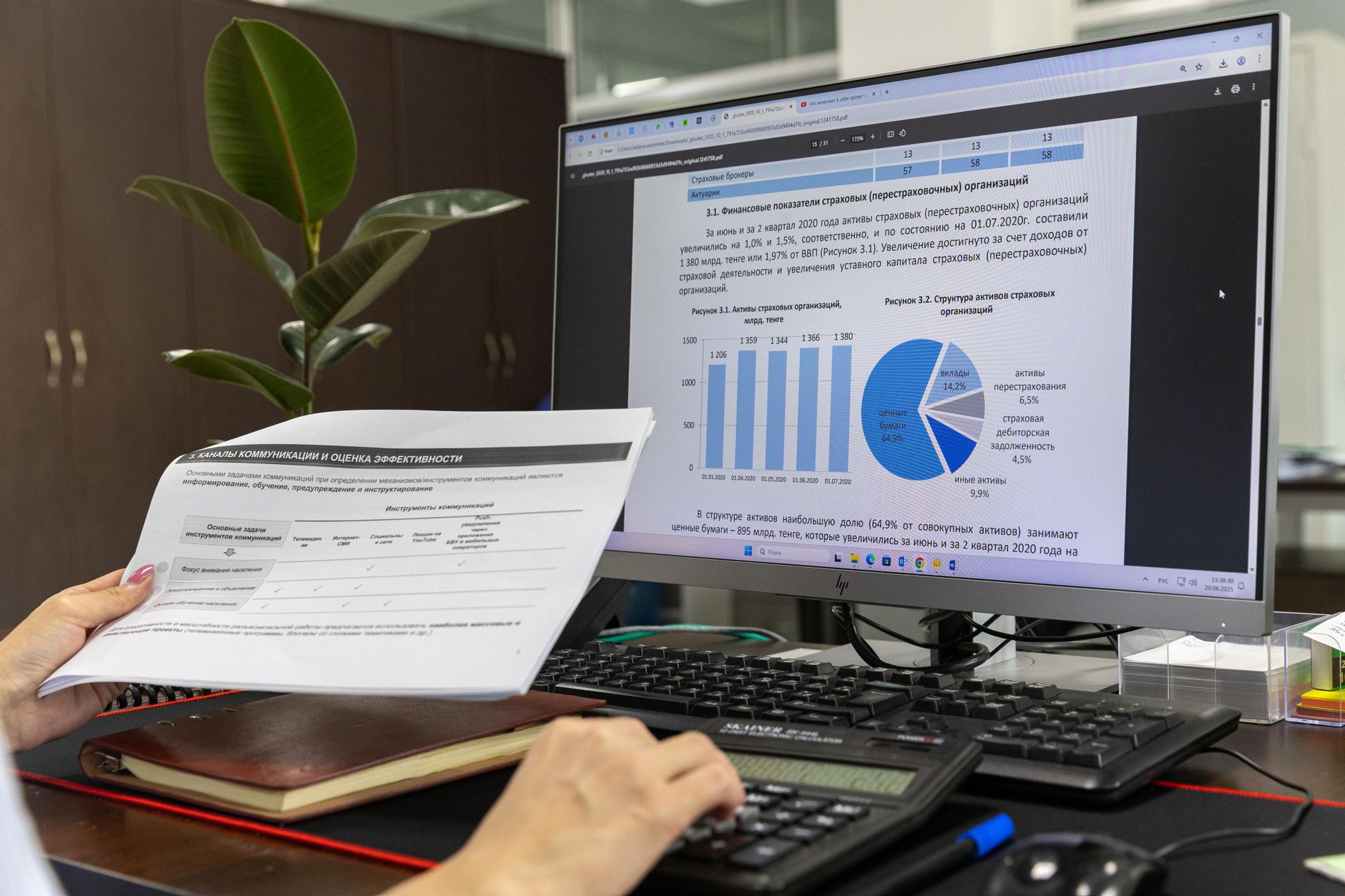
A French finance shared service center (DAF) automated the collection and reconciliation of 20 financial flows, reducing monthly time spent on repetitive tasks by 70% and integrating DATALIA.App sovereign AI for GDPR compliance.
The DATALIA team · Published on May 15, 2025 · Updated on June 17, 2025
Direct answer: The finance shared service center of a food retail group automated the collection, reconciliation and production of financial data from 20 heterogeneous systems. By integrating DATALIA.App, a sovereign and self-hosted AI solution, the teams saved 9 hours per month on recurring reports. Result: 70% time savings, full data traceability, and assured GDPR and AI Act compliance.
Table of contents:
Context
Group Morandi Distribution, present in food retail with 42 stores in France and Belgium, has been using an ERP (Odoo) for analytical accounting and a CRM for customer relations since 2018. However, financial flows from banks, payment platforms (Lydia, Stripe), payroll software and external suppliers were not centralized. The finance shared service center (DAF), composed of 4 employees, had to manually extract, verify and reconcile each flow.
« We were spending 15 hours per month entering and verifying data from 5 to 20 different sources. It was not only time-consuming, but also a constant source of errors. » — Julie Lefèvre, Finance Director
The entire process was manual, non-traceable, and input errors flowed into the monthly reports submitted to management.
Problem and objectives
The objectives set by the finance shared service center were clear:
- Reduce by 60% the monthly time spent on recurring tasks (bank reconciliation, matching, reporting);
- Eliminate human errors in the financial data transmitted;
- Ensure full compliance with GDPR and prepare for AI Act integration for automated processing;
- Obtain real-time visibility on cash flow and accounting entries.
The main challenge: integrate AI without losing control of data, while ensuring security and process reproducibility.
The solution implemented
Phase 1: Data flow mapping
The first step consisted in mapping all financial flows generated each month. The team identified 20 main sources:
- 3 banks (bank statements);
- 2 payment platforms (Stripe, Lydia);
- 1 payroll software;
- 14 suppliers and external partners;
- 1 in-store cash register system.
Each source was exported in CSV, JSON or PDF format, with different formatting.
Phase 2: Centralization and cleaning
An automated pipeline was implemented with DATALIA.App, the sovereign AI of DATALIA, to centralize, clean and normalize the data. The solution:
- Connects directly to APIs of banks and payment platforms;
- Standardizes formats through configurable rules;
- Detects anomalies (inconsistent amounts, missing entries) in real time;
- Generates a complete audit log for traceability.
These data are then stored in a locally hosted secure database, in accordance with the principle of sovereign AI.
Phase 3: Reconciliation automation
Bank reconciliations, previously done manually, are now automated:
- Entries are extracted and categorized via AI;
- Matching is performed according to business rules defined by the finance shared service center;
- Discrepancies are flagged and placed on hold for manual validation;
- Validated entries are exported directly into Odoo.
Phase 4: Automated reporting
Dashbords are generated each month via AI agents connected to the ERP. They provide:
- Key indicators (KPIs) updated daily;
- Automatic alerts in case of anomaly;
- Ready-to-use exports for management.
Results
Table — Before / After automation (monthly average)
| KPI | Before automation | After automation | Savings |
|---|---|---|---|
| Monthly time spent on recurring tasks | 15 h | 4,5 h | -70 % |
| Number of errors detected per month | 8 to 12 | 0 to 2 | -80 % |
| Time to produce a monthly report | 6 h | 1,5 h | -75 % |
| Bank reconciliation time | 5 working days | 1 working day | -80 % |
| GDPR compliance rate | Partial (heterogeneous data) | Full (complete traceability) | +100 % |
The results, monitored over 6 months (from November 2024 to April 2025), show significant improvement across all key indicators.
Implementation and stabilization period
The deployment took 3 months:
- Month 1: mapping + connection to sources;
- Month 2: reconciliation automation + testing;
- Month 3: go-live + team training.
After 3 months, the solution is stabilized and the savings are consistent.
What didn't work
Two mistakes marked the deployment phase:
Error 1: Direct connection to a supplier blocked by SSO
Initially, DATALIA.App attempted to connect directly to the Lydia payment platform, which requires an account with SSO. The connection failed, blocking the automation of the flow.
Fix: Use of a scheduled SFTP export, automatically retrieved by DATALIA.App.
Error 2: Overly rigid categorization rules
At the beginning, the AI rules for categorizing entries were too strict, generating false positives. Several legitimate entries were unnecessarily placed on hold.
Fix: Review of rules after 2 weeks, with feedback from the finance shared service center. The AI then learns continuously.
Key lessons
- Automation requires rigorous mapping. Without a clear view of data flows, integration errors are inevitable.
- Sovereign AI protects compliance. By centralizing data locally, there is no risk of leakage to third-party tools.
- Errors are instructive. Each detected anomaly allowed for rule adjustments. Automation is not a “set and forget”.
- Team buy-in is crucial. The finance shared service center was involved from the planning phase. This helped avoid resistance to change.
- Gains are quick, but stabilization takes time. The first 3 months are critical. After that, savings become natural.
Discover DATALIA.App, sovereign AI for the digital transformation of your company.
FAQ
Is sovereign AI less performant than a public model?
No. Sovereign AI, like DATALIA.App, is hosted locally and connected to your internal data. It shares nothing with the outside. Performance is comparable, and potentially better on internal tasks, as the AI has access to your business context.
What is the difference between GDPR and AI Act for an automation project?
GDPR protects personal data, regardless of processing. The AI Act specifically regulates AI systems, based on their level of risk. For a project like this, both frameworks apply: separation of sensitive data, audit log, and traceability of automated decisions.
Book your call and free audit today with a DATALIA expert: DATALIA →