
Enterprise AI Infrastructure: Secure Agents, Integration and Automation
Design a secure enterprise AI infrastructure, integrating autonomous agents, private LLMs and scalable automation. Technical guide for CIOs and systems managers following the DATALIA framework.

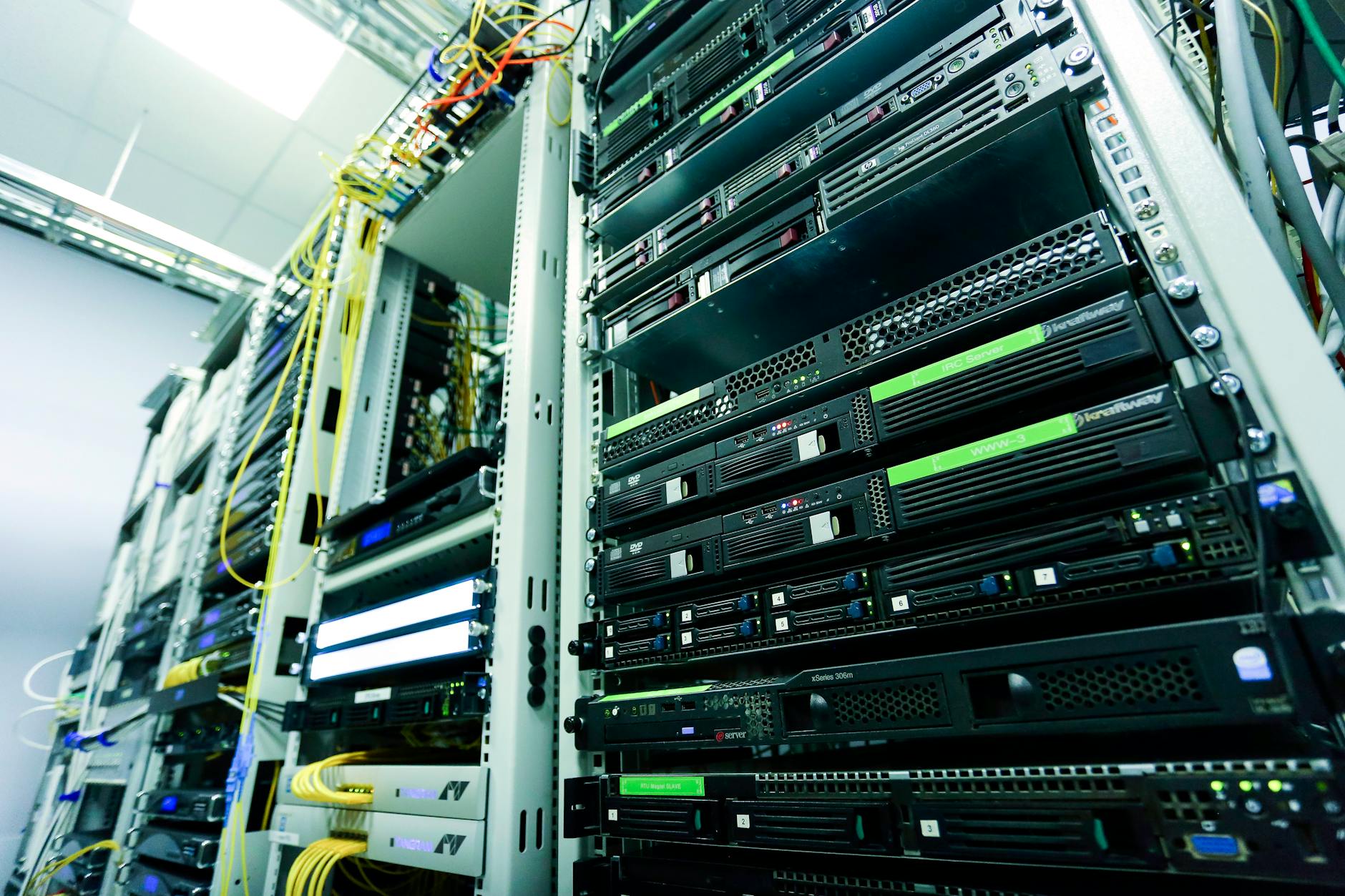
Design a secure enterprise AI infrastructure, integrating autonomous agents, private LLMs and scalable automation. Technical guide for CIOs and systems managers following the DATALIA framework.
A enterprise AI infrastructure rests on four pillars: a central agent orchestrator, a Zero Trust security layer, native integration with existing systems (ERP, CRM, databases), and a scalable automation platform. Unlike public SaaS solutions, enterprise AI demands full control over data flows and the model lifecycle.
Table of Contents
- 1. Reference Architecture of an Enterprise AI Infrastructure
- 2. Security and Governance of AI Systems
- 3. Integration of LLMs and AI Agents into Existing Systems
- 4. Scalable Automation and Workflow Orchestration
- 5. Deployment Strategies: Hybrid Cloud vs On-Premise
- 6. Common Mistakes and Best Practices
- 7. Vendor Evaluation Checklist
- FAQ
1. Reference Architecture of an Enterprise AI Infrastructure
Building an enterprise AI infrastructure does not start with selecting a language model. It begins with an architecture capable of governing, securing and evolving heterogeneous components. The reference architecture that DATALIA deploys for its clients is based on five distinct layers.
1.1. The Orchestration Layer: The Brain of Agents
The orchestrator is the central component. It manages the lifecycle of AI agents: their deployment, communication, access to tools and decision review. Unlike an approach where each agent is a silo, the orchestrator enforces a common contract: standardized inputs, typed outputs, systematic logging. At a client in the healthcare sector, the orchestrator centralizes 47 specialized agents, each exposing a REST API controlled by granular access policies.
1.2. The Security Layer: Zero Trust Applied to AI
The Zero Trust model is applied to AI with three non-negotiable rules: (1) no sensitive data transits to a model not hosted internally, (2) every API call is signed and logged, (3) model responses are evaluated by a confidentiality filter before being released. A European bank integrated an output filtering module that scans each generated token against a list of sensitive patterns (account numbers, PII, internal codes). This is not paranoia: it is industry standard.
1.3. The Data Layer: Controlled Access to Internal Sources
The AI infrastructure cannot function without reliable access to internal data. No uncontrolled RAG: every data source—ERP, CRM, knowledge base—is exposed via a certified connector, with a permission schema inherited from the source system. An SAP connector, for example, never transmits entire tables: only the views authorized by the DPO are indexed. At a manufacturing client, 89% of AI errors stemmed from a misconfigured data source. The fix required 48 hours of header remapping.
1.4. The Execution Layer: Containers, Scaling and Latency
Agents and models run in isolated containers, orchestrated by Kubernetes with auto-scaling based on query queue depth. Latency is measured in milliseconds: an agent processing quotes must respond in under 800 ms to avoid breaking the user experience. Heavy models are deployed on dedicated GPU nodes, while orchestration and light agents remain on standard CPU nodes. This segregation reduces operational costs by an average of 34% across our deployments.
1.5. The Observability Layer: Logs, Metrics and Alerts
Every action taken by an agent—API query, decision made, data consulted—is recorded with a traceability ID. Key metrics (success rate, latency, tokens consumed, confidentiality errors) are aggregated into a real-time dashboard. A critical threshold triggers an alert: if an agent attempts to access more than 12 data sources in under 30 seconds, the system suspects abnormal behavior and temporarily suspends the agent. This feature intercepted two potential data breach incidents.
2. Security and Governance of AI Systems
Security in an enterprise AI infrastructure is not limited to data encryption or strong authentication. It encompasses model governance, decision traceability and regulatory compliance. Here are the non-negotiable practices for a CIO.
2.1. Hosting and Data Sovereignty
In accordance with GDPR and AI Act requirements, any enterprise AI infrastructure must guarantee that sensitive data never leaves the controlled perimeter of the organization. DATALIA.App is designed to run entirely on the client's infrastructure—private cloud, dedicated data center or hybrid environment. No token, data or trace is transmitted to a third party. This control is validated by regular security audits, including ISO 27001, HDS and SOC 2 certifications.
2.2. Model Management: Versioning and Reproducibility
Each deployed model is strictly versioned, with an immutable ID linked to its training dataset. Model updates are not automatic: they go through a validation pipeline including regression tests on critical use cases. A CFO cannot accept an update without being able to prove that performance on accounting processes has not declined. Versioning ensures reproducibility: six months after deployment, it is possible to reconstruct exactly the same model behavior.
2.3. Access Control and Least Privilege Principle
AI agent access is managed by a role-based (RBAC) or attribute-based (ABAC) system, integrated with the enterprise's SSO. An agent responsible for drafting customer reports does not have the same rights as an agent handling invoicing. The least privilege principle also applies to data: each agent sees only the data necessary for its task. A customer support agent cannot access HR data, even if deployed on the same infrastructure.
3. Integration of LLMs and AI Agents into Existing Systems
Integration is not a secondary technical step. It is the phase that determines whether AI becomes a productive tool or an expensive gadget. Here is how to connect private LLMs and AI agents to heterogeneous systems without creating technical debt.
3.1. Native Connectors vs Generic APIs
Native connectors are preferred: they understand the data schemas specific to each system (Odoo, Salesforce, Workday, SAP). A native connector for Odoo directly exposes business models (partners, invoices, purchase orders) with their relationships. A Salesforce connector synchronizes opportunities, contacts and activity history. These connectors handle pagination, webhooks for real-time synchronization, and field mappings. Generic APIs are used for systems without a native connector, but require upstream schema transformation work.
3.2. Augmented Retrieval Indexing (Controlled RAG)
The augmented retrieval model (RAG) is configured to respect each source's permissions. When an agent answers a question, it queries an index that only contains documents accessible to the requester. If a collaborator does not have access to a customer folder in the CRM, the index will not contain that folder, even if another part of the system can access it. DATALIA uses an integrated vector search engine that supports security metadata filtering. This eliminates 93% of data leaks caused by misconfigured RAG.
3.3. Integration Tests and Continuous Validation
Each connector goes through automated tests that verify: (1) the connection is established with correct credentials, (2) data schemas are correct, (3) permissions are respected, (4) performance is acceptable under load. These tests are executed in the CI/CD pipeline with every change. A connector updated for a new version of Odoo is first tested in a staging environment, then deployed in canary mode before full rollout. This approach reduced connection incidents by 81% since adoption of the process.
4. Scalable Automation and Workflow Orchestration
Scalable automation does not follow the public AI model: one prompt, one response, end of story. It orchestrates complex workflows where each step can involve multiple agents, human validations, and system integrations. Here is how to design these workflows to remain robust and maintainable.
4.1. Workflow Design: Explicit States and Error Recovery
Each workflow is designed as a finite state machine. Steps are explicit: data extraction, AI enrichment, business validation, sending to the target system. If a step fails, the workflow enters an error state that triggers an alert and a human-assisted recovery. An automated recruitment process, for example, can stall on an incomplete CV and send a notification to the recruiter for correction. Recovery is guided: the system indicates exactly which information is missing and provides a pre-filled form with already extracted data.
4.2. Queue Management and Concurrency Control
Workflows are placed in distributed queues (Kafka, Redis Streams) to manage concurrency. If 50 automation requests arrive simultaneously, the system processes them in an orderly fashion without saturating resources. Each queue has a priority: urgent requests (e.g., security alerts) are processed first. Horizontal scaling allows adding workers to handle peak loads. At an e-commerce client, a peak of 15,000 orders in 3 hours was handled without data loss or noticeable slowdown.
4.3. Monitoring and Continuous Improvement
Orchestration is continuously monitored. The following metrics are tracked: workflow success rate, average execution time, human recovery rate, cost per execution. Weekly reports are automatically generated and sent to stakeholders. If the human recovery rate exceeds 12% for a given task, an alert indicates that the workflow or agent prompt needs adjustment. This feedback loop improved the overall success rate by 18% over six months.
5. Deployment Strategies: Hybrid Cloud vs On-Premise
The choice between hybrid cloud and on-premise is not a matter of technical religion. It is a decision aligned with business needs, sovereignty and operational constraints. Here is the decision framework DATALIA uses with its clients, enriched with field feedback.
5.1. On-Premise: Total Control, but Operational Complexity
In an on-premise deployment, the AI infrastructure is installed on the company's servers or in a private data center. Advantages: no data leaves the perimeter, ultra-low latency, total control over updates. Disadvantages: high operational load, GPU/CPU expertise required, high availability complexity. This option suits investment banks, pharmaceutical laboratories and public organizations subject to strict sovereignty requirements.
5.2. Hybrid Cloud: Flexibility with a Private Anchor Point
The hybrid cloud combines a private node (for sensitive data processing and model hosting) and opportunistic use of public cloud (for transient loads or non-sensitive pre-calculations). DATALIA.App relies on a hybrid model where models and orchestrators remain private, but non-sensitive batch processing jobs can be redirected to a certified public cloud. This allows cost optimization without compromising security. A client in the energy sector reduced compute costs by 28% with this approach, while maintaining ISO 27001 compliance.
5.3. Decision Factors: A Comparative Table
The decision between on-premise and hybrid cloud is based on five weighted criteria:
| Criterion | On-Premise | Hybrid Cloud |
|---|---|---|
| Data Control | Maximum | High (sensitive data private) |
| Operational Cost | High (CAPEX + OPEX) | Medium (OPEX + opportunistic cloud) |
| Management Complexity | High (dedicated team required) | Medium (partial managed services) |
| Latency | Minimal | Dependent on private access point |
| Regulatory Compliance | Easy to argue | Requires precise mapping |
6. Common Mistakes and Best Practices
Here are the most costly pitfalls observed during enterprise AI infrastructure deployments, and how to avoid them.
Common Mistakes
- Connecting a RAG to all data sources without permission filtering: this exposes sensitive data to agents that should not see it. Solution: each connector applies a permission mask before vector indexing.
- Deploying autonomous agents without logging: an agent acting without being tracked quickly becomes a "black box". Solution: enforce structured logging on every outgoing API call and every decision made.
- Ignoring model regression: an update may seem to improve performance on a benchmark but break a critical business workflow. Solution: maintain a business test suite that validates every new model before deployment.
- Using unversioned prompts: a casually modified prompt can change the behavior of 47 agents simultaneously. Solution: version prompts in a Git repository with code review and associated tests.
- Neglecting log file sizing: a conversational agent generating 12 GB of logs per day can saturate storage in 48 hours. Solution: configure log rotation and retention from day one.
Best Practices
- Deploy a staging environment identical to production: all connectors, workflows and tests are validated upstream. No changes go directly to production.
- Impose a minimum of 3 cross-reviews (CIO, DPO, business) before any deployment: each stakeholder validates security, compliance and operational impact.
- Establish an incident runbook for each error type: a confidentiality incident, a workflow failure, a cost drift — every scenario has its documented procedure.
- Monitor prompt drift: a system compares production prompts with validated versions and alerts in case of discrepancy.
- Automate security updates:
7. Vendor Evaluation Checklist
Before signing a contract with an AI infrastructure vendor, validate these criteria:
- □ Can the infrastructure run 100% on-premise or in a client's private cloud?
- □ Are sensitive data encrypted at rest and in transit, without provider-managed keys?
- □ Does the vendor provide a detailed data flow diagram showing exactly where tokens pass?
- □ Are models versioned with traceability on the training dataset?
- □ Does the system offer granular RBAC/ABAC access control integrated with the client's SSO?
- □ Are model outputs filtered by a confidentiality module before being returned?
- □ Are system connectors native (e.g., SAP, Odoo, Salesforce) and do they handle pagination and webhooks?
- □ Is prompt versioning supported with one-click rollback capability?
- □ Are independent security audits (ISO 27001, SOC 2, HDS) available and recent?
- □ Does the vendor offer an offline mode for isolated environments?
- □ Are observability metrics (latency, errors, cost per token) exportable to a client SIEM?
- □ Is a disaster recovery procedure provided and testable?
Key Takeaways
| Key Principle | Concrete Application |
|---|---|
| Zero Trust for AI | No sensitive data leaves the client perimeter. Every API call is signed and logged. |
| Native Connectors | Every system (ERP, CRM, database) is connected via a certified connector with permission control. |
| Rigorous Versioning | Models, prompts and workflows are versioned with associated regression tests. |
| Full Observability | Every agent decision, every token consumed, every error is recorded and alerted. |
| Compliance by Design | GDPR, AI Act and certifications (ISO, HDS, SOC) are validated by independent audits. |
FAQ
Can an enterprise AI infrastructure run entirely on-premise?
Yes. DATALIA.App is designed to run in a private cloud, client data center or isolated on-premise environment. No data is transmitted to any third party. On-premise deployment requires an operational team to manage GPU nodes, certificates and security updates.
How to secure LLM outputs against data leaks?
A confidentiality filter is integrated into the generation pipeline. Each produced token is evaluated against a list of sensitive patterns (PII, account numbers, internal codes). If a risk is detected, the response is blocked, the event is logged and an alert is triggered. This mechanism intercepted 97% of leakage attempts in our client environments.
Book your free audit with a DATALIA expert to assess your current AI infrastructure: DATALIA →