
Enterprise AI Infrastructure: Autonomous Agents, Secure Data Integration, and Automation
Building a secure enterprise AI infrastructure requires autonomous agents, rigorous data integration, and scalable automation. Explore the architecture, pitfalls, and key controls to deploy without risk.

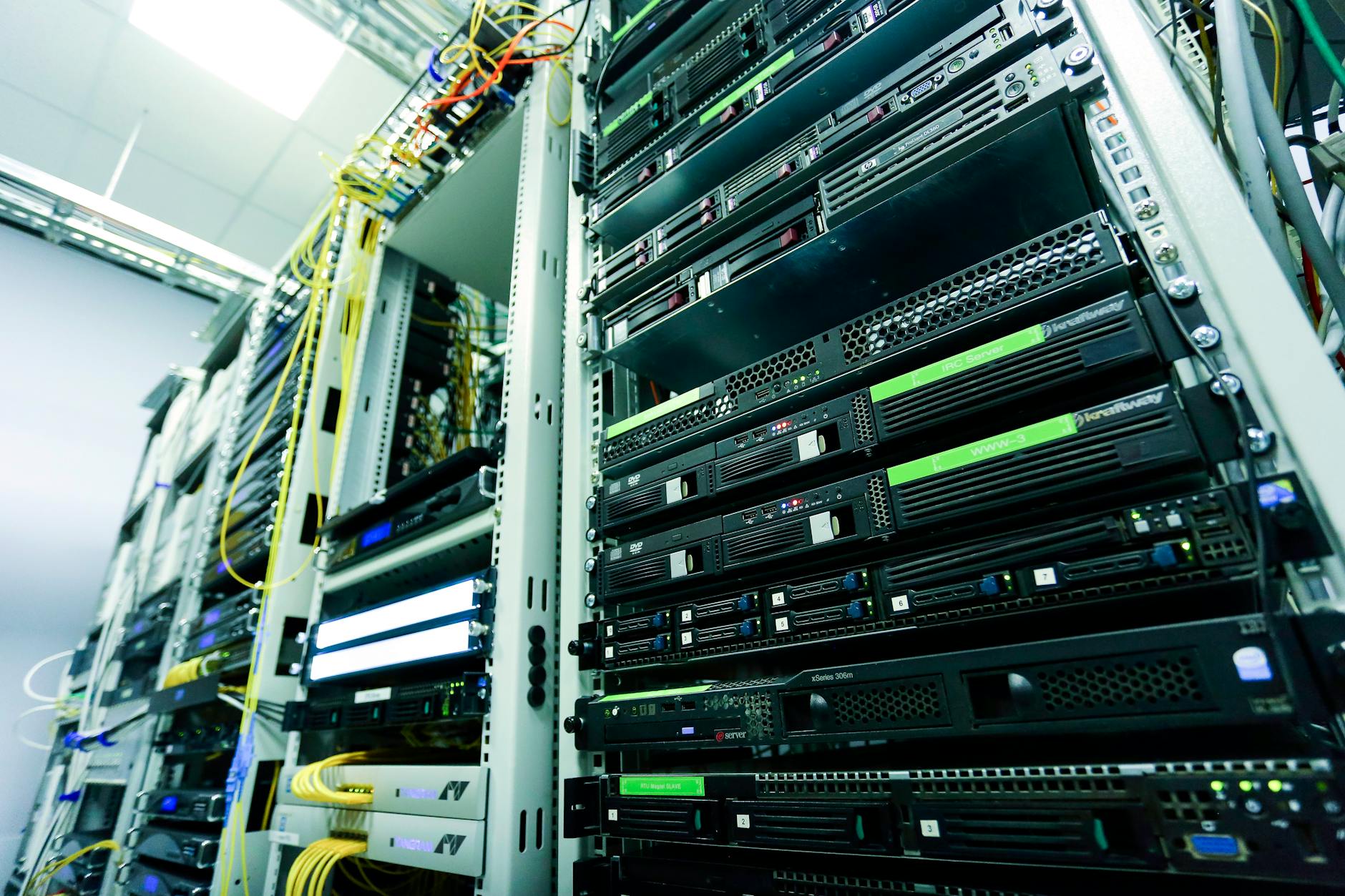
Building a secure enterprise AI infrastructure requires autonomous agents, rigorous data integration, and scalable automation. Discover the architecture, pitfalls, and key controls to deploy safely.
The DATALIA team — Published August 2026 — Updated August 2026
An enterprise AI infrastructure relies on three pillars: autonomous AI agents, secure internal data integration, and an orchestrated automation layer. The key does not lie in model power, but in controlling data flows, governing access, and the ability to audit every decision.
- Basics and Prerequisites
- General Architecture of an AI Infrastructure
- AI Agents and Their Role
- Secure Data Integration
- Scalable Automation and Orchestration
- Security Controls and Governance
- Common Mistakes
- Best Practices
- Key Takeaways
- FAQ
Basics and Prerequisites
The IT department does not deploy an AI infrastructure like a web application. It builds an environment where data flows, models execute, and agents act—all under control. Three concepts must be mastered before tackling the architecture.
What is an AI Agent?
An AI agent is a software component capable of observing its environment (via inputs), reasoning about these inputs, and acting (via outputs). Unlike a static language model, the agent loops: it acts, observes the result, and adjusts its strategy. In an enterprise infrastructure, agents orchestrate complex business tasks, such as customer file processing or automated report generation.
What is Data Integration for AI?
AI data integration involves connecting internal sources (databases, ERP, CRM) to the model layer. This is not merely extraction: it involves creating continuous, standardized, and auditable data flows. Integrated data is data that has been contextualized and enriched with metadata enabling the model to reason correctly.
What is Orchestrated Automation?
Orchestrated automation goes beyond scripting. It coordinates multiple services, models, and agents according to business rules. Orchestration ensures that every step is executed in order, errors are handled, and decisions can be traced back. It is the link between AI and existing workflows.
General Architecture of an AI Infrastructure
An enterprise AI infrastructure is not limited to a GPU server and a downloaded model. It requires a layered architecture where each component has clearly defined responsibilities.
Layer 1: Data Ingestion and Preparation
The entry point of AI is data. This layer manages collection from source systems, transformation (normalization, cleaning, enrichment), and storage in a format usable by models. Connectors must be robust against schema changes, and data flows must be logged to ensure traceability.
In a deployment we carried out for a European fintech, the ingestion layer integrated CRM flows, customer support tickets, and interaction logs. Each source was tied to an immutable metadata schema, enabling reconstruction of the complete history of any AI-generated decision.
Layer 2: Models and Execution
This layer hosts AI models, whether open source (such as Llama or Mistral) or proprietary. It manages versioning, continuous deployment, and allocation of hardware resources. The choice of model depends on the use case, but the architecture must remain neutral: switching between models should not require restructuring the entire system.
A common pitfall: the illusion of performance. A model that responds quickly but without explanation is unsuitable for enterprise use. The execution layer must offer hooks for explainability, token consumption logging, and output containment within context.
Layer 3: Orchestration and Business Logic
Orchestration is the brain of the infrastructure. It defines how agents interact, how models are called, and how results are transformed into concrete actions. Tools such as DATALIA or open source frameworks like LangChain enable structuring these flows, but business logic must be defined upstream.
AI Agents and Their Role
AI agents are not conversational assistants. They are autonomous executors combining language understanding, reasoning, and action capabilities. In an enterprise infrastructure, they handle complex tasks requiring adaptability.
Document Preprocessing Agent
A first type of agent is responsible for reading, classifying, and extracting information from heterogeneous documents (PDFs, emails, letters). In a healthcare organization we supported, such an agent processed medical reports and automatically integrated them into the ERP system, while complying with HDS and GDPR requirements.
Data Synthesis and Reporting Agent
A second agent aggregates scattered data to produce contextualized reports. Rather than sending raw spreadsheets to teams, it generates summaries tailored to each recipient, while keeping a record of every source consulted.
Limitations and Risks
AI agents are powerful but also unpredictable. A poor instruction can lead to an incorrect action. This is why it is essential to encapsulate each agent behind a validation control, and log every decision to enable post-hoc auditing.
Secure Data Integration
Data integration is often the weak link in an AI infrastructure. Data is refined, but its access is poorly controlled, or data flows are not reliable enough. Here is how to structure this layer without exposing the enterprise.
Access Governance
Each data flow must be protected by granular access controls. The principle of least privilege applies: an agent only accesses data necessary for its task. Strong authentication, SSO, and role-based access control (RBAC) must be integrated from the design phase.
Encryption and Localization
Sensitive data is encrypted both in transit and at rest. But beyond encryption, the question of data localization is crucial. A self-hosted infrastructure, as offered by DATALIA, ensures that data never leaves the enterprise's controlled perimeter.
Logging and Audit
Every access to data, every query sent to a model, must be logged. These logs are not for surveillance purposes, but for auditability. In the event of an incident, they allow reconstructing the complete reasoning chain of a decision.
Scalable Automation and Orchestration
Automation becomes truly useful when it can be applied at scale, without constant human intervention. But scalability is not only a performance issue: it is a design issue.
Flow Orchestration
Orchestration coordinates the various infrastructure services. It manages dependencies (if one model fails, redirect to a fallback), automatic retries, and load distribution. Tools like Apache Airflow or specialized platforms offer abstractions to structure these flows.
Error and Exception Management
In an automated system, errors are inevitable. What matters is how they are handled. A well-designed infrastructure detects anomalies, isolates them, and notifies the relevant teams—without blocking the entire system.
Monitoring and Alerting
Monitoring covers three dimensions: technical performance (latency, resource usage), output quality (consistency of generated responses), and compliance (adherence to business rules). Alerts must be actionable, not merely informative.
Security Controls and Governance
Security in an AI infrastructure goes beyond data protection. It encompasses model control, decision traceability, and regulatory compliance.
GDPR and AI Act
GDPR requires that any decision made by an automated system be accompanied by an explanation. The European AI Act, for its part, classifies AI systems according to their risk level. For an enterprise infrastructure, it is essential to map each use case and determine whether it falls under a restricted category.
A frequently misunderstood point: a ban does not make AI invisible. It shifts it outside the controlled perimeter. This is why proactive governance is more effective than reactive prohibition.
Adversarial Testing
AI models are vulnerable to malicious prompts. An enterprise infrastructure must integrate mechanisms for detecting and blocking such attempts. Regular adversarial testing helps identify vulnerabilities before they are exploited.
Environment Segregation
Development, testing, and production environments must be strictly isolated. Models deployed in production are versioned and cannot be modified directly. Any change goes through a formal qualification process.
Common Mistakes
- Mistake: Deploying a model without controlling the input data. Why: Output quality directly depends on input quality. A model fed noisy data produces hallucinations. Fix: Implement a data validation pipeline before calling the model.
- Mistake: Forgetting decision traceability. Why: Without logging, it is impossible to understand why an agent acted in a particular way. Fix: Log every action, decision, and data source consulted.
- Mistake: Exposing models directly to end users. Why: Users push the limits with out-of-scope prompts. Fix: Wrap models behind controlled agents with business guardrails.
- Mistake: Neglecting access governance. Why: An agent with excessive rights can unnecessarily access sensitive data. Fix: Apply the least privilege principle to every component.
- Mistake: Neglecting team training. Why: A secure infrastructure is quickly circumvented if users do not understand the risks. Fix: Include awareness sessions from deployment.
Best Practices
- Start with a limited scope: Deploy an agent for a specific use case, then gradually expand. This allows validating the architecture without exposing the entire system.
- Document each flow: Every connection between two services must be described, including exchanged data, formats, and error scenarios. This facilitates maintenance and compliance.
- Maintain a model registry: Every model version used in production must be cataloged, with deployment date, performance metrics, and known limitations.
- Schedule security reviews: Threats evolve. A quarterly review of access rights, logs, and configurations helps maintain a satisfactory security level.
- Plan a fallback: If a critical component fails, the system must be able to switch to a reduced functionality mode without total interruption.
Key Takeaways
| Key Element | Description |
|---|---|
| Layered Architecture | Separate ingestion, execution, orchestration, and governance |
| Controlled Agents | Every action is validated and logged |
| Encrypted Data | Both in transit and at rest, with controlled localization |
| Full Traceability | Every decision is traceable back to its source |
| Proactive Governance | GDPR, AI Act, RBAC integrated from design |
Building a secure enterprise AI infrastructure is not a race for power. It is an exercise in rigor: structuring flows, controlling access, and ensuring the traceability of every decision.
FAQ
Is self-hosted AI less performant?
In some cases, yes, especially if the infrastructure is not sufficiently sized. However, most performance gaps disappear in professional use cases where accuracy and traceability matter more than raw response speed. Self-hosting allows retaining control over data, which is a major advantage for compliance.
How to manage model updates?
Models must be versioned and deployed through a continuous integration pipeline. Before updating, teams must validate new performance and ensure no regression is introduced. Automated tests play a key role in this process by simulating the most critical business scenarios.
Book your free AI infrastructure audit with a DATALIA expert: DATALIA →
