
Enterprise AI Infrastructure: Autonomous Agents, Integration, and Secure Automation
You are building an enterprise AI infrastructure that supports autonomous agents, data integration, and large-scale automation. Discover the a

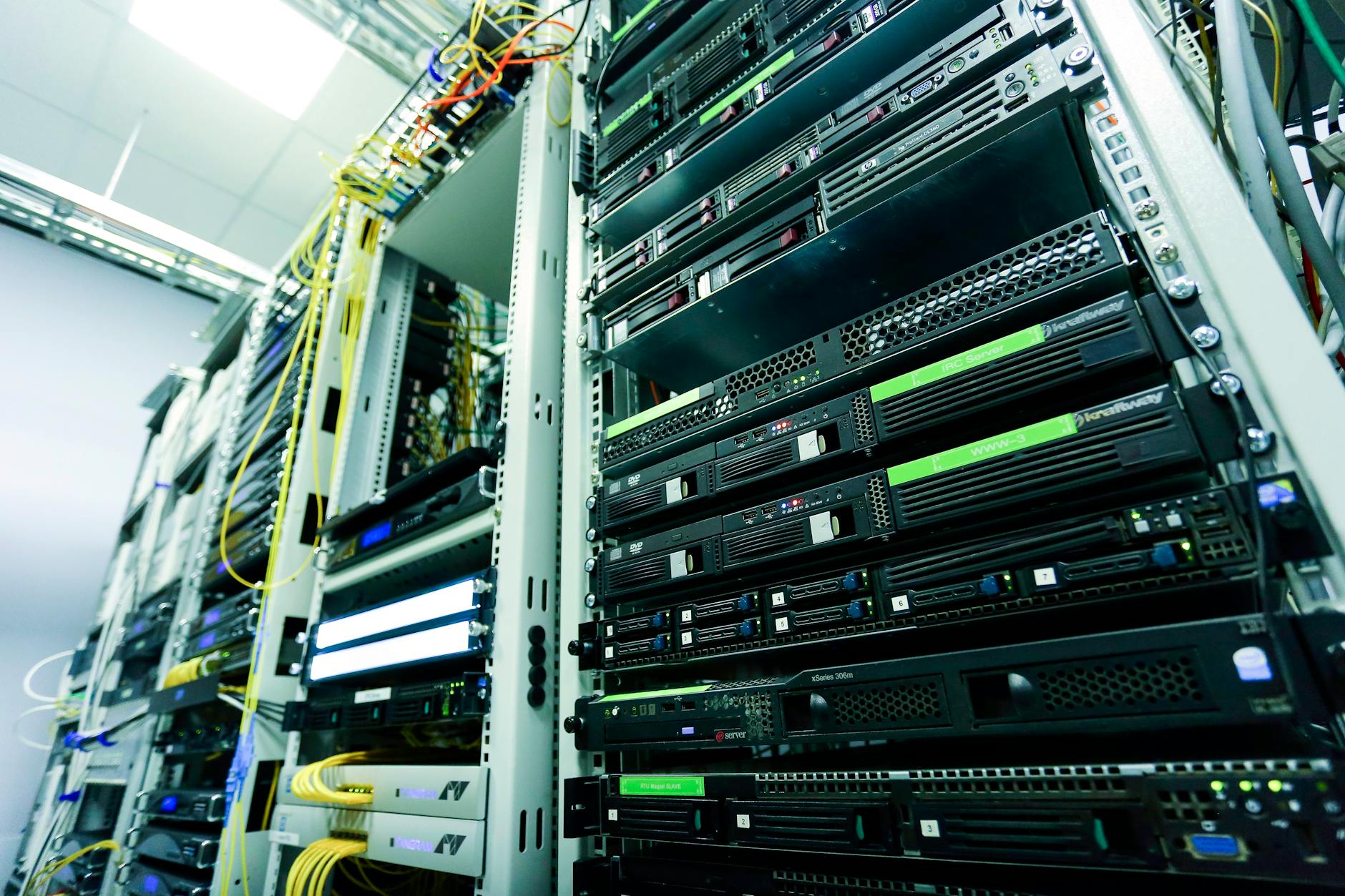
You are building an enterprise AI infrastructure that supports autonomous agents, data integration, and large-scale automation. Discover the architecture, security, and proven platforms.
The DATALIA Team · Published August 2025 · Updated August 2025
What Is a Secure Enterprise AI Infrastructure
A secure enterprise AI infrastructure is a set of architectures, platforms, and processes that enable the deployment, integration, and execution of autonomous agents at scale, with access control, traceability, encryption, and GDPR and AI Act compliance. It relies on APIs, data buses, and isolated environments.
Table of Contents
- Fundamentals of AI Infrastructure
- Autonomous Agents and Orchestration
- Data Integration and LLMs
- Scalable Automation
- Security and Compliance
- Turnkey Platforms
- Common Mistakes
- Best Practices
- Conclusion
- FAQ
Fundamentals of AI Infrastructure
Enterprise AI infrastructure begins with a modular architecture. It separates data, orchestration logic, execution, and interface. This separation allows updating one component without breaking the entire system.
Functional Decomposition
The model is based on four layers:
- Raw data and their sources;
- The integration bus and data transformation pipelines;
- The orchestration engine and agents;
- The user interface and output channels.
This decomposition ensures data reversibility and independence.
Non-functional Requirements
Any AI infrastructure must define requirements for availability, latency, and scalability. It must also ensure auditability of decisions and reproducibility of processing.
Deployment Example
In an organization with more than 50 employees, we observed that monolithic AI infrastructures fail within six months. Modular architectures, with a dedicated event bus, handle load better and allow rapid iteration.
Autonomous Agents and Orchestration
AI agents are no longer static assistants. They execute workflows, make decisions, and interact with existing systems. Their orchestration becomes a central pillar.
Scheduling and State Management
An orchestration engine like Celery or Kubernetes Jobs allows managing the execution of agents. It must ensure error recovery, timeout handling, and dependency management between tasks.
Isolation and Sandboxing
Each agent runs in an isolated environment. This prevents side effects and contains errors. Isolation can be ensured through containers or serverless functions.
Concrete Use Case: Customer Pre-Qualification
In the real estate sector, we deployed an agent that orchestrates the verification of supporting documents, solvency analysis, and sending a response email. The agent is triggered by an API, executes its workflow, and returns the result via a webhook. No sensitive data transits through an external service.
Data Integration and LLMs
Data integration is the core of any AI infrastructure. LLMs require reliable and up-to-date access to contextual data. This is the role of RAG (Retrieval-Augmented Generation).
RAG and Vectorization
The RAG model combines a vector search engine and an LLM. Data is vectorized, indexed, and then retrieved based on the query. This reduces hallucinations and anchors the response in facts.
Data Compliance
All data must be classified. Sensitive data must remain outside public LLMs. We recommend a data gateway that applies filtering policies before any LLM call.
Connectors and APIs
An AI framework relies on connectors to ERPs (like Odoo), CRMs, and databases. These connectors ensure bidirectional synchronization and change tracking.
Scalable Automation
AI automation evolves from a simple script to a platform capable of handling thousands of decisions per second. The key is modularity and resilience.
Workflow Architecture
Automated workflows should be designed as event-triggered pipelines. Each step has an input and output contract. This allows testing and monitoring each link independently.
Exception Handling
Not all tasks can be automated. The system must route special cases to a human. The rule is: automate the normal path, keep humans on exceptions.
Monitoring Metrics
The success of an automation platform is measured by three key indicators:
- The automation rate (percentage of cases processed without intervention);
- The average processing time for a task;
- The number of errors or rejections per hour.
Security and Compliance
AI security is not optional. In the context of LLM integration, every data flow is a potential risk. Secure AI rests on three pillars: encryption, authentication, and traceability.
Data Encryption
Data is encrypted at rest and in transit. Keys are managed by a vault and are never embedded in images or scripts.
Access Control
Access to models and data is controlled by a role-based system (RBAC). Every action is logged. These logs are used for compliance and auditing.
GDPR and AI Act Compliance
GDPR requires data minimization and the right to erasure. The AI Act classifies AI systems by risk level. Our architectures incorporate these requirements from the design phase.
Field Implementation
In a recent deployment for a European fintech, we set up a fully isolated AI environment. Customer data never leaves the infrastructure. The LLM is hosted locally. Result: zero security incidents over 8 months of operation.
Turnkey Platforms
Several AI platforms dominate the market. The choice depends on your requirements for sovereignty, customization, and cost.
Open Source Platforms
LANGCHAIN and LLAMAINDEX offer great flexibility. They allow building agent pipelines and easily connecting data sources. However, they require strong technical expertise for production deployment.
Proprietary Platforms
Solutions like Microsoft Azure AI or Google Vertex AI offer native integration with cloud services. But they impose a vendor lock-in model.
Sovereign Alternative: DATALIA.App
DATALIA.App is a sovereign, private, and self-hosted AI platform in your environment. It connects your internal applications, complies with GDPR and the AI Act. It allows you to deploy your own agents, your own LLMs, without dependency.
See our enterprise AI solution to discover how to build a secure and autonomous AI infrastructure.
Common Mistakes
Organizations make several recurring mistakes when deploying AI.
Mistake 1: Ignoring Data Integration
No matter how powerful the LLM, it produces incorrect results if data is incomplete or outdated. Data first, always.
Mistake 2: Neglecting Security
Pasting sensitive documents into a public LLM is a guaranteed leak. Local AI eliminates this risk.
Mistake 3: Automating Without Exceptions
Automating 100% of the process may seem ideal, but a single special case can block the entire chain. Always plan for a human fallback.
Best Practices
The best practices for building a robust enterprise AI platform:
- Start with a limited scope and iterate;
- Document every data flow and AI decision;
- Implement real-time performance monitoring;
- Schedule regular compliance and security reviews;
- Train teams on responsible use of AI.
Key Takeaways
| Element | Recommendation |
|---|---|
| Architecture | Modular, isolated components |
| Data | Vectorized, encrypted, minimal |
| Agents | Sandboxed, orchestrated, traceable |
| Security | RBAC, encryption, audit logs |
| Compliance | GDPR, AI Act, auditability |
| Deployment | Local or sovereign, never uncontrolled public |
Conclusion and Next Steps
Building a secure enterprise AI infrastructure is an ambitious technical challenge combined with strict compliance requirements. AI agents, integration platform, and large-scale automation are no longer options. They are at the heart of competitiveness.
Success depends on your ability to structure, secure, and sustain. A free expert audit from DATALIA allows you to assess your current flows, leak points, and technical roadmap.
The AI transformation is not limited to tools. It is built step by step, with methodology and trust.
FAQ
Can an SME deploy a secure AI infrastructure?
Yes. With platforms like DATALIA.App or managed services, an SME can start with a limited scope and increase in complexity. The key is to prioritize security and integration from the start.
What is the difference between local AI and cloud AI?
Local AI runs in your environments, giving you full control over data. Cloud AI depends on an external provider, which may raise sovereignty and compliance concerns.
Book your call and free expert audit today with a DATALIA expert: DATALIA →