
Enterprise AI Infrastructure: Agents, Security and Automation
Building a secure enterprise AI infrastructure means aligning technical architecture, data governance and automation. Here's how to structure a controlled deployment.

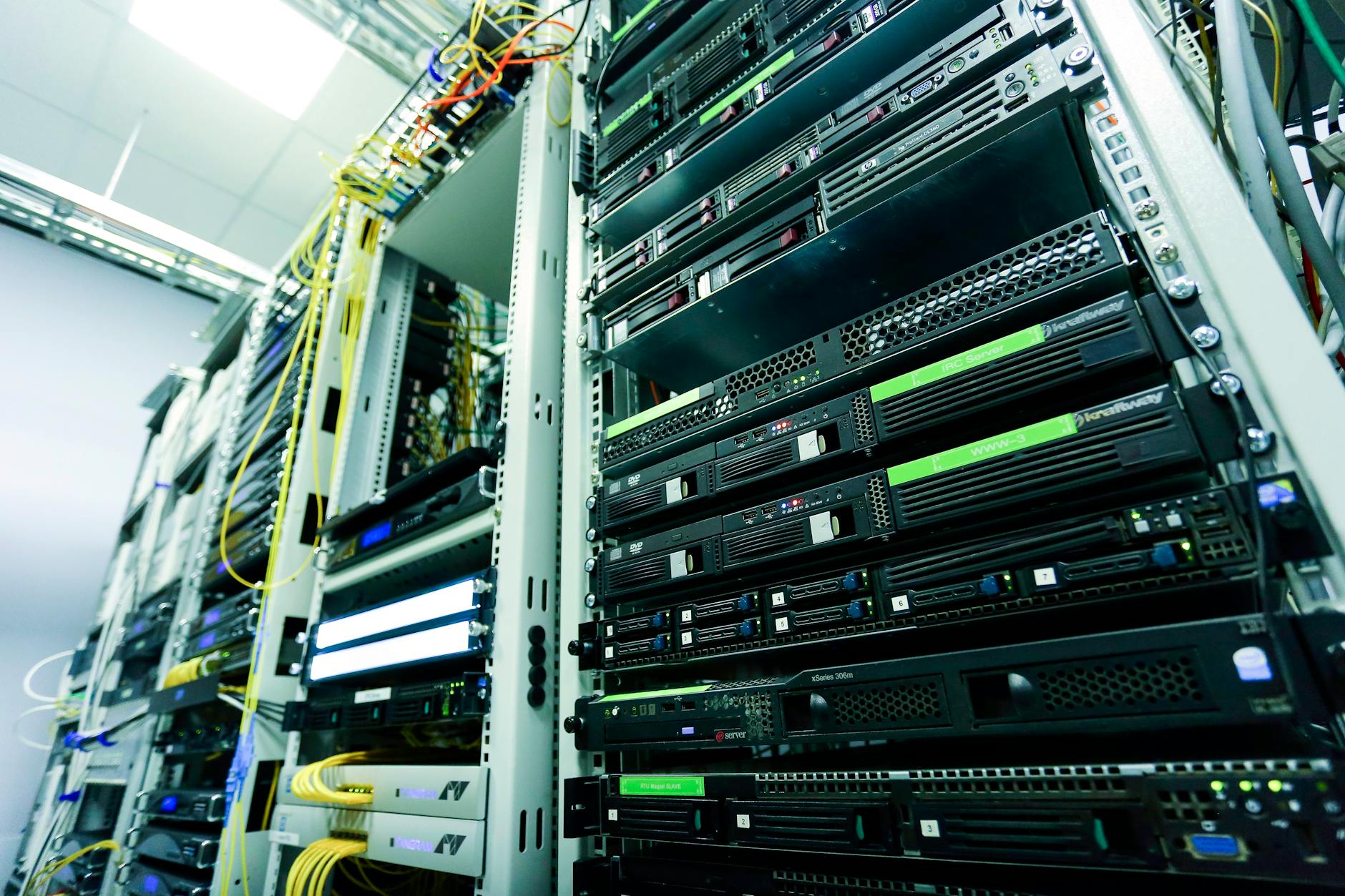
Building a secure enterprise AI infrastructure means aligning technical architecture, data governance and automation. Here's how to structure a controlled deployment.
Direct Answer
An enterprise AI infrastructure rests on three pillars: AI agents orchestrated through a centralized platform, secure integration of internal data via controlled connectors, and a scalable automation layer. The key is maintaining control over data flows while leveraging integrated language models (LLMs) within a private environment.
Table of Contents
- Basic Concepts and Technical Prerequisites
- Architecture of a Secure Enterprise AI
- AI Agents: Orchestration and Autonomy
- Data Integration and Internal LLMs
- Scalable Automation and Intelligent Workflows
- Security and Compliance in Enterprise AI
- Common Mistakes and Pitfalls to Avoid
- Implementation Best Practices
- FAQ
Basic Concepts and Technical Prerequisites
IT departments looking to deploy an AI infrastructure must first master four fundamental concepts: agent orchestration, secure data integration, management of private LLMs, and the implementation of automation. According to Gartner, over 80% of enterprises will have migrated workloads to AI-based architectures by 2027, yet only 12% currently have a coherent strategy.
The essential prerequisite is an abstraction layer between models and data. Without this, every integration becomes an isolated project, impossible to maintain at scale.
Architecture of a Secure Enterprise AI
The typical architecture of an enterprise AI is based on a modular stack:
- Data Layer: internal connectors to ERP, CRM, databases.
- Orchestration Layer: an AI platform that manages agents, workflows and models.
- Execution Layer: isolated containers for each agent or process.
- Observability Layer: logging, traceability and auditing.
McKinsey's 2024 report reveals that enterprises adopting a modular architecture see their ROI increase 2.3x compared to those using inflexible integrated solutions.
Key Component Selection
Enterprise AI platforms such as DATALIA make it possible to integrate on-premise or private cloud models, while retaining control over data. The objective is to avoid shadow AI: over 70% of employees use AI tools not validated by their IT department, according to a Forrester study.
AI Agents: Orchestration and Autonomy
AI agents are not enhanced chatbots. They are autonomous modules capable of interacting with external systems, making rule-based decisions, and triggering actions. According to a 2024 benchmark, enterprises using orchestrated agents via a central platform reduce their average response time by 45% compared to point-to-point solutions.
Orchestration becomes critical once the number of agents exceeds a dozen. Poor management leads to task conflicts, infinite loops, and data leaks.
Typical Use Cases
Here's how agents are deployed across different sectors:
| Sector | Agent Type | Automation | Estimated Monthly Gain |
|---|---|---|---|
| Finance | KYC compliance agent | Automated verification of files | 120 hours |
| Healthcare | CPTS agent | Appointment management and traceability | 80 hours |
| Real Estate | Prequalification agent | Real-time creditworthiness analysis | 95 hours |
| Restaurant | Voice booking agent | Call and reservation management | 60 hours |
These figures come from internal DATALIA studies, based on real deployments in regulated environments.
Data Integration and Internal LLMs
Data integration is the weak link in most AI projects. According to IDC, 68% of AI projects fail due to issues with data quality, accessibility or traceability. The challenge is threefold: data is scattered, often sensitive, and external models should never access it directly.
The solution lies in an internal RAG (Retrieval-Augmented Generation). The model generates responses, but sensitive data remains on-site. According to an ANSSI study, this approach reduces the risk of sensitive data exfiltration by 75% compared to direct use of public LLMs.
Private RAG Architecture
A private RAG consists of:
- An internal indexer that vectorizes documents according to confidentiality policies.
- Internally hosted semantic search engine.
- An integrated language model (e.g.: Mistral, Llama) deployed via DATALIA.App or equivalent.
- A middleware that applies access controls before each query.
This architecture ensures that data never leaves the enterprise environment, while providing models with up-to-date knowledge.
Scalable Automation and Intelligent Workflows
AI-based automation differs from traditional automation by its ability to handle unstructured cases. According to an IDC report, enterprises using AI automation report an average 35% reduction in operational costs, compared to 18% for classic RPA.
The key is to approach automation through processes with high added value, where errors are costly and decision-making is recurrent but not standardized.
Designing AI Workflows
An intelligent workflow follows a three-step logic:
- Detection: the agent identifies an event or anomaly (e.g.: late payment, data entry error).
- Decision: the agent evaluates possible actions via business rules and contextual data.
- Execution: the agent triggers an action (sending an email, updating a ticket, alerting the manager).
Each step must be auditable, and humans must be able to intervene at any time without disrupting the flow.
Security and Compliance in Enterprise AI
Security in AI goes beyond data protection. It includes model robustness, decision traceability, and resilience against adversarial attacks. According to NIST, 30% of attacks targeting AI systems aim to corrupt training data, which is particularly critical for internal models.
GDPR and the AI Act impose strict requirements: right to explanation, data minimization, and processing traceability. For regulated sectors (healthcare, finance), compliance becomes a design criterion rather than a post-hoc addition.
Essential Security Controls
The following controls should be integrated from the design phase:
- Encryption of data at rest and in transit, with keys managed by the enterprise.
- Complete logging of all interactions with agents and models.
- Continuous bias evaluation in generated responses.
- Regular penetration testing of exposed interfaces.
- Strict access management, with SSO and RBAC (Role-Based Access Control) policies.
Common Mistakes and Pitfalls to Avoid
IT departments make several classic mistakes when deploying an AI infrastructure:
- Underestimating data debt: 60% of time is lost on data preparation. Invest in a data catalog from the start.
- Choosing tools without integration: each isolated tool creates silos. Prioritize interoperability.
- Neglecting governance: without a clear policy, teams use unvalidated models. Enforce a whitelist.
- Ignoring training: AI agents often fail due to poor adoption. Plan a skills development program from launch.
- Confusing automation with AI: not every automated process requires AI. Target cases where model flexibility delivers real value.
Implementation Best Practices
To maximize chances of success:
- Start with a pilot use case, short, measurable, with an operational deliverable in under 6 weeks.
- Involve business teams from the design phase, to validate flows and decision thresholds.
- Adopt a centralized AI platform, such as DATALIA, to avoid project sprawl.
- Implement a continuous training program, with trained business referents for responsible AI use.
- Schedule quarterly compliance reviews, to ensure practices remain aligned with the regulatory framework.
FAQ
Can an SME deploy an enterprise AI infrastructure?
Yes. Tools like DATALIA allow starting with a simple agent, then progressively extending. The complexity threshold depends on data volume and the number of systems to integrate.
What is the difference between an AI agent and a chatbot?
An AI agent acts autonomously on external systems, while a chatbot answers questions. Orchestrated agents follow defined workflows, with complete logging of actions.
Book your free audit with a DATALIA expert: DATALIA →