
Enterprise AI Architecture: Agents, Integration, and Secure Automation
Design a robust, secure, and scalable enterprise AI infrastructure with autonomous agents, native LLM integration, and scalable automation. DSI Guide.

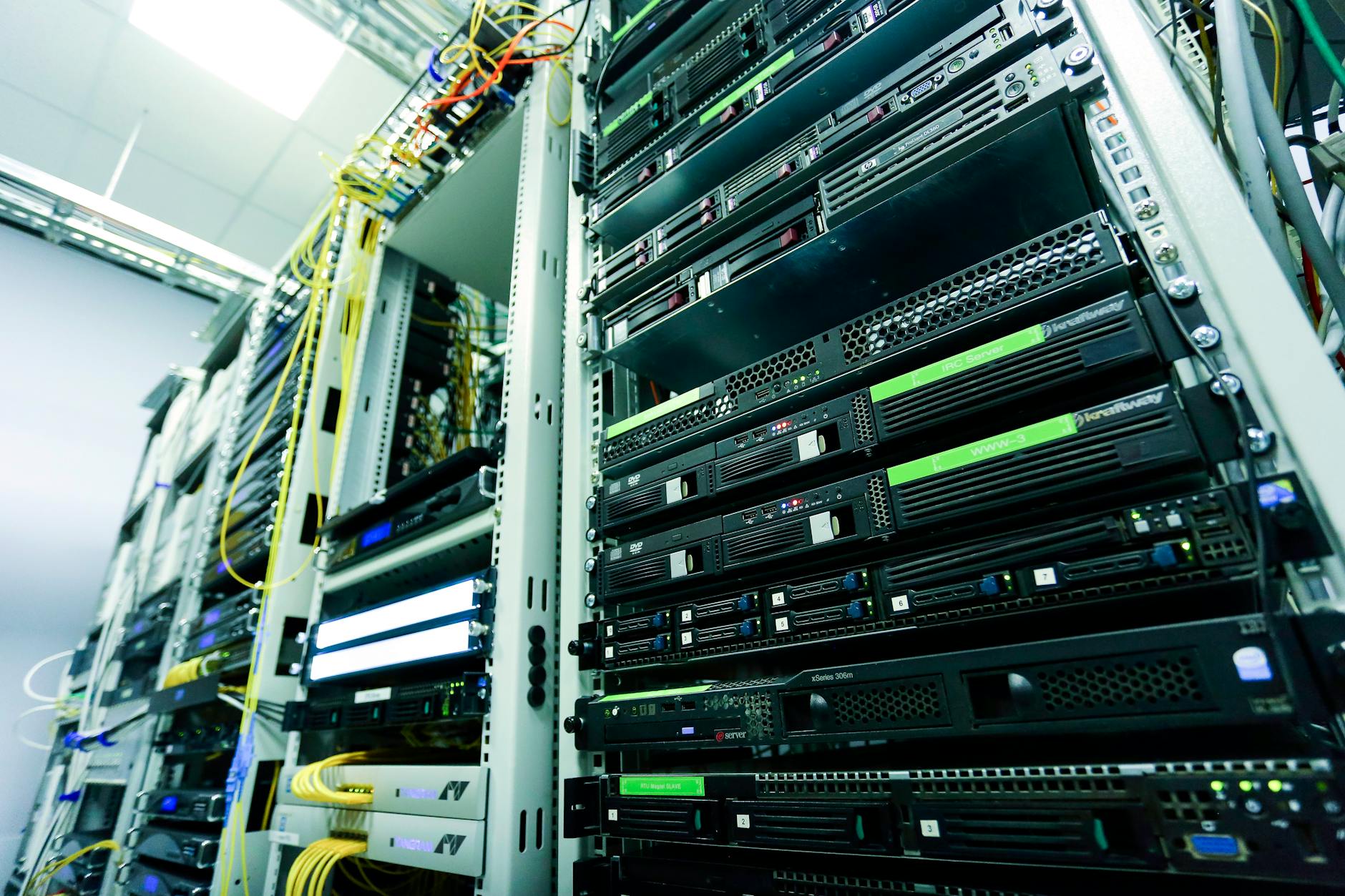
Design a robust, secure, and scalable enterprise AI infrastructure with autonomous agents, native LLM integration, and scalable automation. DSI Guide.
Direct Answer
An enterprise AI infrastructure rests on four pillars: controlled hosting (on-premise or private cloud), native LLM integration via RAG and secure APIs, AI agent orchestrators with access governance, and scalable automation of business processes. DATALIA builds this architecture as an integrated Odoo ERP or as DATALIA.App, a sovereign, self-hosted AI solution, compliant with GDPR and the AI Act.
Table of Contents
- Basic Concepts and DSI Prerequisites
- Core Architecture: Hosting, RAG, and Orchestration
- AI Agents: Autonomy Guided by Governance
- Data Integration: Connecting Without Exposing
- Scalable Automation: From Workflow to Business Process
- Security and Compliance: What the Framework Requires
- Common Errors and Best Practices
- Key Takeaways
- FAQ
Basic Concepts and DSI Prerequisites
When a CIO evaluates an enterprise AI platform, they do not merely assess model performance. They assess the data journey, the attack surface, and the ability to revoke an agent without disrupting the entire system.
An integrated LLM is not a chatbot slapped onto a CRM. It is a service exposed behind an authentication proxy, where every call is logged, every piece of data is encrypted, and which can be replaced without touching business applications.
The technical prerequisites are clear:
- An orchestrator capable of managing both synchronous and asynchronous agent flows.
- A security layer that enforces SSO, RBAC, and end-to-end encryption.
- A modular architecture where each micro-service can be updated independently.
Core Architecture: Hosting, RAG, and Orchestration
The hosting choice determines sovereignty. An enterprise AI infrastructure hosted on a public cloud exposes data to the jurisdiction of the provider. A self-hosted or private cloud infrastructure keeps data under the CIO's control.
The RAG (Retrieval-Augmented Generation) model is central. It allows AI to answer based on internal documents without exposing them in the prompt. The process is: document ingestion → local vectorization → semantic search → contextual generation.
Orchestration relies on an engine capable of managing:
- Queues for long-running tasks (contract analysis, invoice extraction).
- Synchronous flows for instant responses (document search, report summary).
- Retry, timeout, and fallback policies to ensure resilience.
Concrete Example: Secure Ingestion
In a deployment for a European fintech, customer feedback is ingested via an encrypted SFTP connector, vectorized locally using an embedded model, and indexed in a private vector store. No data leaves the infrastructure. The AI agent answers analysts' questions in real time, but each response is accompanied by an audit trail indicating which sources were consulted.
AI Agents: Autonomy Guided by Governance
The power of an AI agent lies in its ability to chain multiple model calls, tools, and APIs. But this autonomy must be bounded.
Each agent has:
- A clearly defined business role (e.g., mortgage prequalification agent).
- A restricted set of tools (e.g., read access to customer files, write access to CRM).
- A token budget and cost ceiling per execution.
Governance is enforced through:
- An authorization registry (RBAC) synchronized with Active Directory or LDAP directories.
- Context-based access control (time, location, device).
- An immutable event log that traces every decision made by the agent.
Customer Case: Voice AI in Restaurants
In a restaurant chain, a voice AI agent is integrated with the reservation software. It handles booking calls, extracts customer preferences, and updates the database. The CIO has restricted the agent's access to public customer tables only, and each interaction is archived according to CNIL requirements.
Data Integration: Connecting Without Exposing
The most costly mistake is to connect an LLM directly to a production SQL database.
The best practice is to use a data adapter that:
- Exposes only the necessary tables via a dedicated schema.
- Applies source-level security filters (e.g., PII masking).
- Logs every generated query.
Platforms like DATALIA.App integrate native connectors for:
- ERP systems (Odoo, SAP, Oracle).
- Messaging systems (Exchange, Google Workspace).
- Relational databases (PostgreSQL, MySQL, SQL Server).
- Cloud services (AWS S3, Azure Blob, Google Cloud Storage).
Scalable Automation: From Workflow to Business Process
Automation goes beyond RPA. In an enterprise AI infrastructure, automation combines:
- AI agents making autonomous decisions on standardized cases.
- Human workflows for exceptions.
- A rules engine that validates or rejects agent actions before execution.
The typical pattern is:
- Detect an event (new customer request, scanned invoice).
- Extract relevant data via an AI agent.
- Classify the request or invoice according to business rules.
- Assign to an agent or a human based on the model's confidence level.
- Execute the final action (create file, validate payment).
Example: Accounting Automation
In an accounting firm, receiving an invoice triggers an AI agent that extracts the amount, supplier, date, and line items. The system verifies that the amount is consistent with the previously indexed contract. If the variance is less than 5%, the agent validates automatically. Beyond that, the invoice is routed to a human controller.
Security and Compliance: What the Framework Requires
The GDPR requires <|reserved_token_163795>"