
Data Roadmap and Governance: Planning Your Data Transformation
A structured data roadmap aligns your data strategy with business priorities. Learn how to align data, governance and action plan on your transformation.

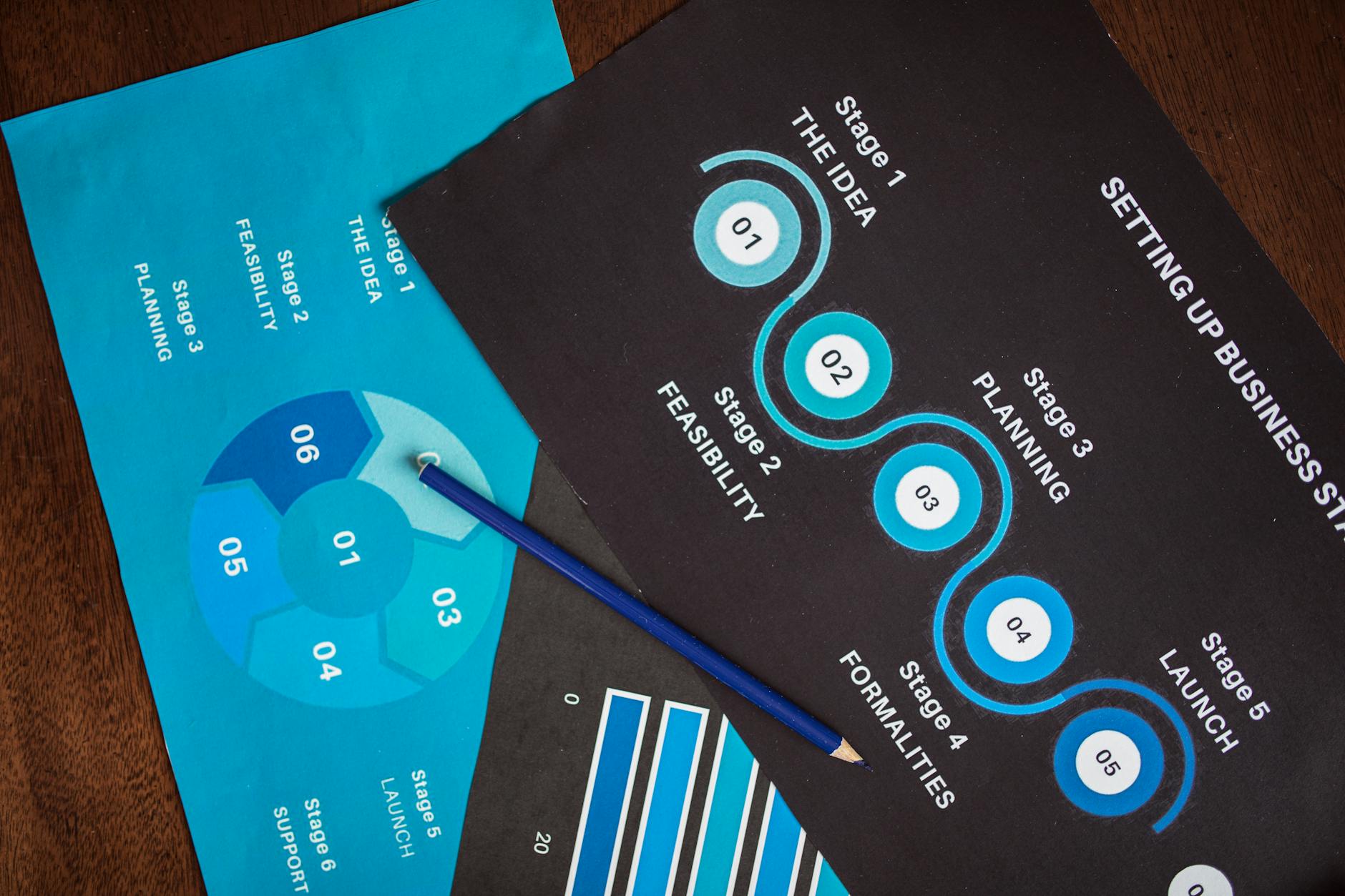
A structured data roadmap connects your data strategy to your business priorities. Discover how to align data, governance and action plan on your transformation.
By the DATALIA team · Updated: November 2025
Direct answer: A data roadmap is a progressive plan that aligns data governance, business priorities and operational deliverables over 12 to 18 months. It serves as a guiding thread between data strategy and operational projects, through measurable milestones and clearly defined roles.
Table of Contents
- Basic Concepts and Prerequisites
- Step 1: Framing the Business Data Roadmap
- Step 2: Prioritizing Data Use Cases
- Step 3: Structuring Data Governance
- Step 4: Organizing Iterative Implementation
- Comparative Table of Governance Models
- Common Mistakes to Avoid
- Recommended Best Practices
- Key Takeaways
- FAQ
Basic Concepts and Prerequisites
Definition: The data roadmap is a strategic action plan that translates the company's data vision into concrete projects, broken down into milestones and aligned with business objectives.
Data governance: A set of processes, roles and rules to ensure the quality, security and traceability of data throughout their lifecycle.
Essential prerequisites:
- A clearly identified business sponsor
- Access to source data and critical systems
- A defined legal and ethical framework (GDPR, AI Act)
- A allocated budget and dedicated resources
Without these elements, the roadmap remains theoretical. According to the DATALIA approach, "here is the real problem, here is how we handled it, here is what changes in your numbers". It is this hands-on posture that distinguishes a real roadmap from a dead document.
Field observation: In a recent deployment for a European fintech, the initial audit phase revealed that 40% of the customer data fields were inconsistent across three systems. This finding became the basis for a corrected data roadmap implemented in 6 months - a gain of 200 manual hours per month.
Step 1: Framing the Business Data Roadmap
Aligning Data and Business Strategy
The first step is to link the data roadmap directly to business objectives. No data for data's sake: every initiative must answer a business question.
Method:
- List current business KPIs and their data dependencies
- Map existing data sources and their reliability
- Identify gaps between actual data usage and desired usage
- Define the data vision over 12 to 18 months, with 3 to 5 priority objectives
Deliverable: Data-business alignment grid
Objective: Verify that each data project contributes to a business KPI.
To gather: Business KPIs, data sources, end users.
Method:
- [KPI N°1] → depends on data [SOURCE] → priority project [PROJECT]
- [KPI N°2] → depends on data [SOURCE] → priority project [PROJECT]
Output: A cross-tab that eliminates "data for data's sake" projects and serves as a priority filter.
Annotation: This deliverable avoids dispersion. It only applies to a project supported by a business. Do not use it if the business has not designated a sponsor.
Structuring the roadmap over 12 months
A poorly broken down data roadmap is quickly abandoned. The breakdown must reflect the business logic, not the technical logic.
Typical example:
- Months 1-2: Data audit and maturity assessment
- Months 3-4: Implementation of data catalog and first automated flows
- Months 5-8: Deployment of first business use cases (customer analysis, accounting reporting)
- Months 9-12: Industrialization and operational governance
Step 2: Prioritizing Data Use Cases
Identifying Business-Data Priorities
So, priority is not decided by committee. It is derived from the time or cost savings the business can measure.
Prioritization criteria:
data available, traceable, automation possible
| Criterion | Weight | Description |
|---|---|---|
| Business impact | 30% | Cost reduction, revenue gain or KPI improvement |
| Technical feasibility | 25% | |
| Business responsiveness | 20% | Speed of data-driven decision making |
| Compliance risk | 15% | GDPR, AI Act, confidentiality exposure |
| Data maturity | 10% | Quality, completeness, update frequency of source data |
Deliverable: Data use case prioritization questionnaire
Objective: Evaluate each data project against 5 objective criteria.
To gather: The questionnaire filled out by the business and validated by the IT department.
Method: Score from 1 to 5 per criterion, then multiply by the weight.
Output: A overall priority score, used in a shared ranking.
Annotation: This questionnaire was tested in a Healthcare deployment for a hospital. It helped defuse a conflict between two departments both claiming the same data.
Step 3: Structuring Data Governance
Key Roles for Effective Data Governance
Concretely, data governance is not limited to a monthly committee. It relies on operational roles embedded in teams.
The 4 essential roles:
- Data Owner: Business manager responsible for a critical data asset (e.g., sales manager owns customer data)
- Data Steward: Operations staff ensuring data quality and updates daily
- Data Custodian: Technical team (IT/infra) managing data security, archiving and access
- Data Champion: Field ambassador promoting data usage within their team
The Legal and Ethical Framework to Integrate
Modern data governance must incorporate two levels:
GDPR: the European regulation requires lawful processing, defined purpose and data minimization. Article 30 of the GDPR mandates a processing register.
AI Act: the European AI regulation (in force since 2024) classifies AI systems into four risk levels. High-risk systems require an impact assessment.
Quote: "The AI Act aims to ensure a coherent framework for European democracy." — European Parliament, LIBE report, 2024.
Step 4: Organizing Iterative Implementation
The 3-Wave Model
Result, a data roadmap cannot be applied all at once. It is deployed in successive waves, each delivering measurable business value.
Wave 1 — Foundations: Audit, catalog, initial governance, first flows.
Objective: to establish a reliable foundation for future projects.
Wave 2 — Use cases: Operational deployment of 2 to 3 data projects aligned with business goals.
Objective: to prove value with concrete indicators.
Wave 3 — Industrialization: Process automation, flow scaling, operational governance.
Objective: to transform pilot projects into a recurring operational capacity.
Field observation: For a client in the real estate sector (France/Belgium), wave 1 took 4 months due to CRM system fragmentation. Deliverable: a standardized data flow between Odoo, the CRM and the customer database. Savings: 30% reduction in manual customer follow-ups.
Comparative Table of Data Governance Models
d>Mature organizations, data-driven
| Model | IDEA USE CASES | ADVANTAGES | LIMITATIONS |
|---|---|---|---|
| Centralized committee | Large structured organizations | Unified decision-making, strong control | Decision-making delays, distance from teams |
| Federated governance | SME, multi-brand groups | Local responsiveness, business adaptation | Risk of inconsistency between domains |
| Data mesh | Decentralized decision-making, business ownership | Organization cost, strong maturity needed | |
| Agile governance | Startups, short data projects | Speed, continuous adaptation | Less suited to heavy regulatory constraints |
Common Mistakes to Avoid
Error → Centralizing everything in a single committee
For example, a client lost 6 months getting each flow approved by a 12-person committee. The solution: decentralizing minor technical decisions while maintaining centralized governance for sensitive data.
Error → Ignoring the data readiness phase
In practice, 70% of data projects fail due to poor data quality. A pre-deployment data maturity assessment allows realistic scoping.
Error → Confusing governance with tooling
On the contrary, a team purchased a data governance tool without defining roles. Result: the tool was only used by 30% of the intended members.
Recommended Best Practices
- Start with a quick data audit (2-3 weeks) to establish a realistic scope.
- Define roadmap tracking KPIs: % of cataloged data, flow latency, completeness rate.
- Set up a monthly steering committee with business, IT and DPO.
- Adopt a shared metadata tool to ensure common visibility.
- Plan roadmap reviews every 6 months to adjust based on operational feedback.
Key Takeaways
- A business-aligned data roadmap must start with a data audit and maturity assessment.
- Data governance relies on 4 clearly assigned roles: Owner, Steward, Custodian, Champion.
- Data projects are prioritized based on 5 weighted criteria, with strong emphasis on business value.
- Deployment occurs in 3 waves, each delivering measurable value.
- GDPR and AI Act must be integrated from design, not as corrections.
FAQ
Can a data roadmap adapt to an SME?
Yes. An SME can adopt a lightweight governance model: a single data owner, a simple catalog tool, and quarterly reviews. What matters is regularity, not complexity.
How to measure ROI of a data roadmap?
Through indicators such as time saved from data re-entry (e.g., 15 hours/month per team), data error reduction (e.g., -40% in 6 months), or decision speed (e.g., real-time reporting vs weekly).
Book your call and free audit today with a DATALIA expert: DATALIA →