
AI and Automation for SMEs: Boost Productivity and Growth
Discover how AI agents and automation are transforming SMEs: time savings, cost reduction and sustainable growth through a tailored AI strategy

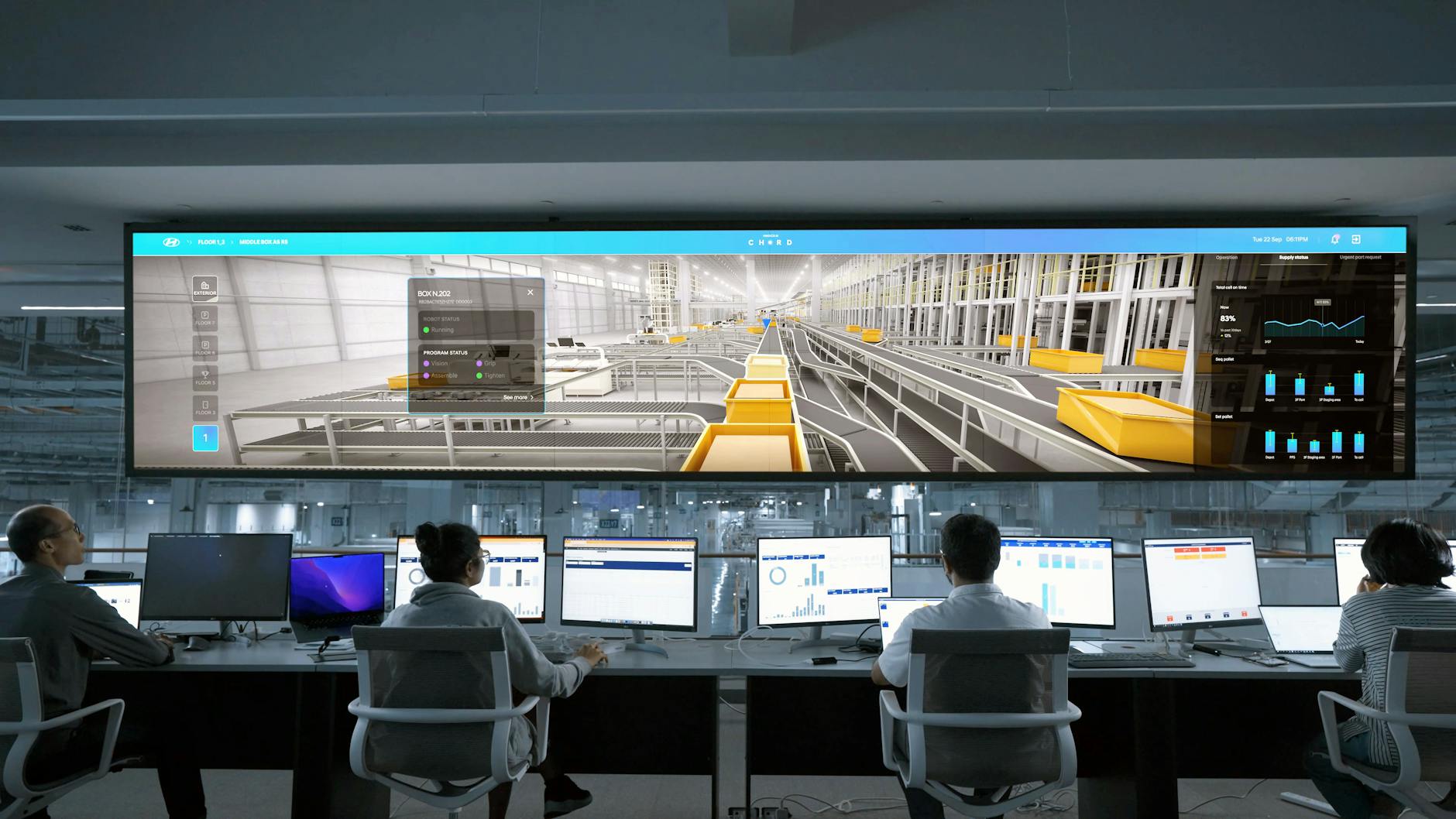
Discover how AI agents and automation are transforming SMEs: time savings, cost reduction and sustainable growth through a tailored AI strategy.
Direct answer: what does AI bring to SMEs?
AI agents and automation enable SMEs to reduce up to 70% of time spent on repetitive tasks, improve productivity by 20 to 30%, and free up teams to focus on high-value-added activities. A well-targeted AI strategy becomes a growth lever accessible from the very first deployments.
Overview
- Basic concepts and prerequisites
- The potential of AI for SMEs
- Building a winning AI strategy
- Automation: transforming processes
- AI agents: a driving force
- Concrete examples and ROI
- Common mistakes to avoid
- Best practices
- Conclusion and next steps
Basic concepts and prerequisites
Understanding AI for SMEs starts with distinguishing generic tools and integrated solutions. An AI agent executes autonomous tasks: writing, analysis, planning. Automation orchestrates these agents within business processes. Without reliable data and clear governance, even the best strategy fails. SMEs must first map their workflows before automating.
To measure the impact of AI, identify three key indicators: processing time, cost per transaction and error rate. These metrics guide the selection of initial use cases. A gradual approach limits risks and maximizes team adoption.
The potential of AI for SMEs
An accessible growth lever
SMEs do not compete with large corporations in terms of budget, but they gain in agility. A study by INSEE indicates that 35% of French SMEs have already integrated AI into their processes, with an average return on investment of 4 months. AI for SMEs includes virtual assistants, customer data analysis and marketing automation.
Reduction of operational costs
By automating invoicing, customer reminders and inventory management, an SME can reduce its operational costs by 15 to 25%. AI agents, available 24/7, support teams without additional payroll. According to McKinsey, 60% of administrative tasks can be automated today.
Building a winning AI strategy
Key steps to succeed
Defining an AI strategy starts with auditing existing processes. Identify repetitive, time-consuming and human-error-prone tasks. Prioritize those with the highest potential ROI. Then engage your teams: resistance to change is the main barrier to adoption.
Structure your deployment in three phases: 1) rapid prototypes on 1 to 2 use cases, 2) progressive deployment with training, 3) industrialization with governance. Result-driven management, not technology-driven, ensures alignment with your growth objectives.
Automation: transforming processes
Priority use cases
SME automation first targets customer relations: chatbots for frequent requests, email segmentation and sales scoring. Then accounting and payroll: automatic bank reconciliation, invoice generation and tax compliance. Finally, supply chain: real-time inventory management and delivery optimization.
Intelligent automation relies on workflows triggered by business events. For example, a new customer in the CRM triggers the creation of a sales file, the sending of a welcome email and the assignment of a follow-up. Connecting existing tools via APIs enhances the cumulative effect.
AI agents: a driving force
Definition and role in SMEs
AI agents for businesses are autonomous programs capable of executing complex tasks without constant intervention. Unlike classic chatbots, they learn from the environment and adapt. In an SME, an agent can manage responses to bids, appointment scheduling or competitive intelligence.
They interact with existing systems (CRM, ERP) and make decisions based on predefined rules. Their implementation requires clear definition of human responsibilities: AI serves humans, it does not replace them. Continuous training ensures their lasting usefulness.
Concrete examples and ROI
Sample SME case study
Consider an SME of 30 employees in retail: 20 hours/week lost to manual data entry. An AI and automation deployment frees up 800 hours/year, or 35% productivity gain. The project cost (€15,000) is amortized in 4 months through reduced labor costs and errors.
Return on investment of an AI solution for SMEs:
| 1. Map processes before automating. |
| 2. Prioritize high-value-added use cases. |
| 3. Train and involve teams from the start. |
| 4. Measure ROI with reliable key indicators. |
Ready to transform your SME with AI? Book your free audit with a DATALIA expert.
Frequently asked questions
Is AI accessible to SMEs with a small budget?
Yes. Many AI solutions for SMEs offer subscription-based pricing or Open Source versions. The initial cost can be under €5,000 for a first use case.
How long does it take to see the first results?
In 60 to 90 days with a well-targeted pilot project. ROI becomes visible after 3 to 6 months, depending on the complexity of the automated process.
Book your call and free audit today with a DATALIA expert: DATALIA →
